
How to Find Visa-Sponsored Jobs in the USA (With AI Tools)
Find out how to search, apply, and get hired for visa-sponsored jobs in the USA - with smart strategies, trusted tools, and AI-powered applications.
If you’re a non-U.S. citizen looking to work in the United States, one phrase likely dominates your job search: visa sponsorship.
Getting a job in the U.S. isn’t just about finding the right opportunity – it’s also about finding an employer willing to sponsor your visa. For international job seekers, this is often the single biggest barrier between them and a career in America.
The U.S. job market is one of the most competitive in the world, and many roles legally require work authorization. Unless you already hold a visa (like F-1 OPT or a dependent work permit), you’ll need a company that’s open to sponsoring foreign talent.
And those companies do exist – but they’re not always easy to find, and they don’t all advertise sponsorship clearly in their job posts.
This guide is designed to help you:
- Understand what visa-sponsored jobs in the USA actually are
- Learn which industries are most open to international hires
- Discover the best platforms and strategies to find sponsor-ready roles
- Improve your chances of being selected – with or without prior U.S. experience
- Use smart tools and AI to automate and optimize the process
Whether you’re a recent graduate on an F-1 visa, a skilled professional abroad hoping to break into the U.S. market, or a candidate already in the States seeking H-1B sponsorship, this guide is for you.
We’ll break down the major visa types, where to look, what to avoid, and how to compete in a system where sponsorship is often limited – but still possible with the right positioning.
Let’s begin with the basics: what exactly are visa sponsor jobs in the USA, and why do companies offer them in the first place?
What Are Visa-Sponsored Jobs?
A visa-sponsored job is any role in the United States where the employer agrees to support a foreign national’s legal right to work by sponsoring a work visa. This is more than just an offer letter – it’s a formal commitment that involves paperwork, legal compliance, and often government filings on behalf of the employee.
If you’re not a U.S. citizen or green card holder, you can’t legally work in the U.S. without authorization. Sponsorship is one of the few pathways that makes that possible.
The Most Common U.S. Work Visas That Require Sponsorship
While there are many types of visas in the U.S. immigration system, here are the ones most relevant to employment:
- H-1B (Specialty Occupations): The most common work visa for skilled professionals. It’s used primarily in tech, finance, engineering, and healthcare. Requires a bachelor’s degree or higher. Subject to an annual lottery unless the employer is cap-exempt (e.g., universities, research institutes).
- O-1 (Extraordinary Ability): For individuals with exceptional talent in fields like arts, science, business, or athletics. Requires significant proof of achievements.
- L-1 (Intra-company Transfer): Used when transferring from an international branch to a U.S. office. Requires at least one year of work with the foreign company.
- TN (Canada & Mexico only): For certain professions under NAFTA/USMCA agreement. Much faster processing but limited to specific fields.
- Green Card Sponsorship (EB-2, EB-3): Permanent sponsorship routes for long-term employment and residence. Often requires labor certification and years of processing time.
Why Do U.S. Companies Sponsor International Workers?
Not every company in the U.S. offers sponsorship – but many do, especially in industries that face talent shortages. Here’s why:
- Skills gap: U.S. employers often struggle to fill highly technical or specialized roles locally. Hiring internationally allows them to access a broader talent pool.
- Global diversity: Many companies – especially in tech, research, and higher education – actively seek global perspectives and multilingual professionals.
- Existing relationships: Sometimes, international students already interning at U.S. companies are offered full-time roles with sponsorship once they graduate.
That said, sponsoring a visa is a commitment. It requires time, legal costs, and compliance. That’s why knowing which companies are open to sponsorship – and targeting them strategically – is crucial.
Industries That Commonly Sponsor Visas in the USA
While any company in theory can sponsor a work visa, in reality only a subset of U.S. employers do it regularly – and they’re concentrated in a handful of key industries.
| Industry | Common Sponsored Roles | Notes |
| Tech | Software Engineer, Data Scientist | Most active in H-1B sponsorship |
| Healthcare | RN, Physician, Therapist | Some require state licensing |
| Academia | Postdoc, Lecturer, Researcher | Cap-exempt from H-1B lottery |
| Finance | Analyst, Consultant, Risk Manager | Selective but sponsor top talent |
| Logistics | Supply Chain Analyst, Engineer | Less common but growing |
If you’re looking for jobs sponsoring visas in the USA, your best chance is to focus on sectors that (1) rely heavily on global talent, (2) have skill shortages, or (3) have structured HR/legal teams that are familiar with the sponsorship process.
Here are the industries that stand out – with roles you can realistically target as an international applicant.
Tech and Software Development
The tech industry is by far the largest sponsor of H-1B visas in the U.S. Every year, companies like Amazon, Google, Meta, Microsoft, and IBM file thousands of petitions.
Common roles:
- Software Engineer
- Data Scientist
- DevOps / Cloud Engineer
- Cybersecurity Analyst
- AI / ML Researcher
- QA Tester
Why they sponsor:
There’s a global shortage of skilled developers, and many candidates with the right experience come from overseas or hold F-1 OPT visas in the U.S.
Healthcare
With growing demand for medical professionals and aging populations, healthcare remains a top industry for employment-based visas – especially EB-3 and H-1B for specialized roles.
Common roles:
- Registered Nurse (RN)
- Physician / Specialist
- Physical Therapist
- Medical Technologist
- Healthcare Data Analyst
Note: Many healthcare roles require state-level licensing or credential evaluation – so plan ahead.
Academia and Research
Universities, colleges, and nonprofit research institutions are considered cap-exempt for H-1B visas. This means they can sponsor visas year-round without being subject to the lottery.
Common roles:
- Postdoctoral Researcher
- University Lecturer
- Research Assistant
- Lab Technician
- Academic Coordinator
Tip: These institutions often have dedicated immigration support offices – making them more foreign-worker friendly than private companies.
Finance, Consulting, and Data
Many large firms in consulting and finance hire global talent, especially in data-driven roles.
Common roles:
- Financial Analyst
- Risk Manager
- Business Intelligence Analyst
- Strategy Consultant
- Actuary
Firms like Deloitte, PwC, McKinsey, and EY regularly appear on lists of companies filing for work visas.
Logistics, Manufacturing, and Supply Chain
While less common, sponsorship can occur in large logistics firms or manufacturing companies that rely on specialized engineers or operations managers.
Common roles:
- Industrial Engineer
- Supply Chain Analyst
- Quality Control Engineer
- Procurement Manager
Best Websites to Find Visa-Sponsored Jobs in the USA
You know which industries hire international talent – now the question is: where do you actually find these jobs?
The truth is, most platforms don’t offer a filter that clearly says “visa sponsorship available.” But that doesn’t mean you’re stuck guessing. Some job boards are better than others when it comes to surfacing sponsor-friendly roles – and knowing how to search smart makes all the difference.
Here’s a breakdown of the best platforms to use – and how to make them work for you.
Why it works:
LinkedIn is still one of the best places to find jobs that sponsor visas – especially in tech, finance, and consulting. Major global companies regularly post jobs there, and many recruiters are open about sponsorship. Tips:
- Use filters like “Full-time” + specific location (e.g. New York, San Francisco)
- Add terms like “H-1B sponsorship” or “visa sponsorship” in the search bar
- Follow companies that have historically sponsored – they often list new roles first on LinkedIn
- Check if the recruiter is listed – if yes, you can message them directly about sponsorship
Indeed
Why it works:
Indeed aggregates listings from multiple sources and offers one of the largest job databases online. Some listings mention visa sponsorship in the job title or description. Tips:
- Search terms: “visa sponsorship” + your target role
- Look for listings with phrases like “willing to sponsor H-1B”
- Filter by employer and job type for better targeting
Monster & Workable
While less popular than LinkedIn or Indeed, both Monster and Workable still feature sponsor-friendly companies – particularly mid-sized firms and those hiring in healthcare, logistics, or research. Tips:
- Use long-tail search terms like “data analyst h1b sponsorship usa”
- Look beyond the first page – many visa-sponsored roles aren’t heavily promoted
Bonus: Use AI Tools to Save Time
If you’re applying from abroad – or juggling dozens of job posts – using automation tools can give you a major advantage. This is where AI-based platforms like LiftmyCV become useful. They allow you to:
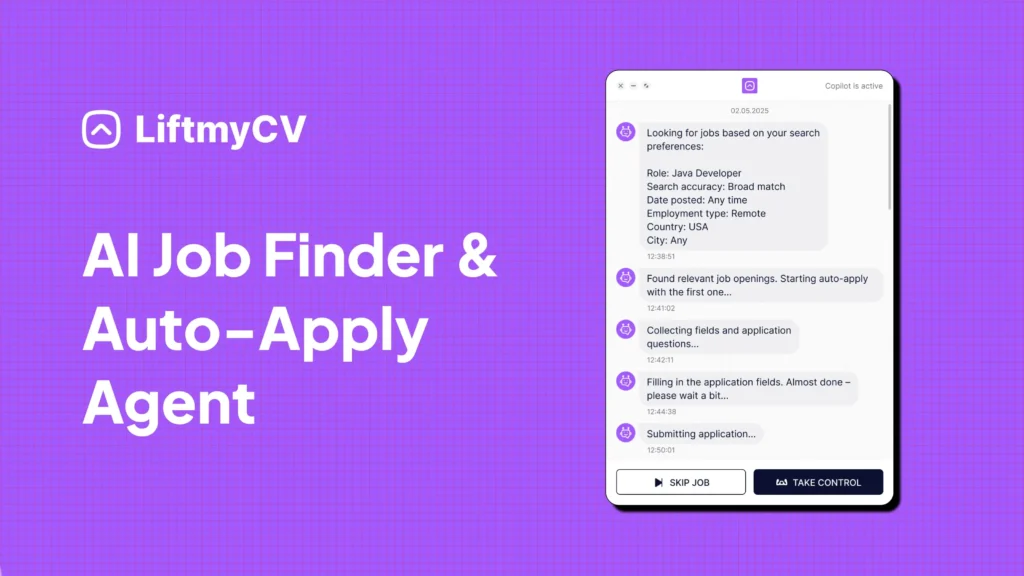
- Filter and discover jobs that mention visa sponsorship in the description
- Auto-apply to roles across multiple platforms like LinkedIn, Monster, Workable, and +4 more job boards
- Track applications and avoid duplicate efforts
- Generate tailored resumes and cover letters for each job, improving match rate
You set the filters and the AI handles the application flow – saving you hours of repetitive searching.
How to Check If a Job Offers Sponsorship
Not every job listing will clearly state, “We sponsor visas.” In fact, many don’t mention it at all – which leads thousands of international applicants to waste time applying to companies that simply can’t (or won’t) hire foreign workers.
So how do you know which jobs actually offer visa sponsorship?
Here’s how to read between the lines – and save yourself time and energy.
1. Read the Job Description Carefully
Some companies are transparent about their sponsorship policies. Look for keywords like:
- “H-1B sponsorship available”
- “Will sponsor international applicants”
- “Must be authorized to work in the U.S. (no sponsorship offered)” ← RED FLAG
- “OPT / CPT eligible” ← usually means the company is open to international students
Also, pay attention to the requirements section. If it says, “Must have legal authorization to work in the U.S. without current or future sponsorship,” that’s usually a hard no.
2. Don’t Be Afraid to Ask
If the posting doesn’t mention sponsorship at all – but everything else looks like a match – it’s okay to reach out.
Best practice:
- Send a short, polite message to the recruiter or hiring contact
- Be direct, but professional
Sample message:
Hi [Name], I came across your opening for [Job Title] at [Company]. I’m highly interested and meet the qualifications, but I wanted to ask if the team is open to visa sponsorship. Thanks in advance!
This approach won’t always lead to a response, but it filters out uncertainty quickly.
3. Use H1B Data and Sponsorship Trackers
Some websites let you look up which companies have sponsored visas in the past. This is helpful when building your target company list.
Trusted resources:
- H1BGrader.com – Search by company, city, or job title
- MyVisaJobs.com – Provides rankings of top visa sponsors
- H1Bdata.info – Aggregates public data from Department of Labor
These databases show:
- Which companies sponsor most often
- What job titles they sponsored
- Salary ranges for each filing
You can use this info to focus on high-probability employers – or validate whether a posting is likely to be sponsor-friendly.
How to Improve Your Chances of Getting Sponsored
Finding a visa-sponsored job in the USA is only half the challenge – the other half is convincing an employer that you’re worth the investment.
Remember: sponsoring a foreign candidate is a commitment. It requires legal paperwork, fees, and internal approvals. That means companies will only consider international applicants who clearly bring something valuable, unique, or hard to find locally.
Here’s how to stand out and improve your odds of getting hired (and sponsored).
1. Tailor Your Resume and Cover Letter for Each Role
Generic applications rarely work – especially if you’re applying from outside the U.S. Employers want to see that you understand the job, the company, and what’s expected.
Tips:
- Use keywords from the job description (especially soft skills and tools)
- Mention visa status clearly but strategically (e.g. “Seeking H-1B sponsorship for long-term employment in the U.S.”)
- Quantify results wherever possible
- Avoid overused buzzwords; focus on real achievements
Your documents should position you not just as a candidate – but as a solution to the company’s hiring needs.
2. Highlight Unique or In-Demand Skills
You’re asking the company to go the extra mile – so your skills should justify that effort.
Focus on skills that are:
- In short supply in the U.S. (e.g. AI/ML, cloud infrastructure, cybersecurity, specialized nursing)
- Hard to outsource
- Cross-functional or multilingual
- Backed by strong portfolios, certifications, or results
If you have experience in global markets, can speak multiple languages, or have contributed to high-impact projects, make sure those points are front and center.
3. Build a Personal Brand That Signals Credibility
In a remote-first hiring landscape, your digital presence matters more than ever.
Make sure you have:
- A clean, up-to-date LinkedIn profile
- Thoughtful, relevant posts or portfolio pieces
- Public contributions to GitHub, Medium, Behance, Notion – depending on your field
- A personal website if possible
This not only helps you look professional, but also signals initiative and trust – critical when applying internationally.
4. Apply to Companies That Sponsor Regularly
We mentioned this earlier, but it’s worth repeating: your chances of success go way up if you focus on companies that are already familiar with the sponsorship process.
You can find them by:
- Checking H1B sponsor databases (e.g. MyVisaJobs)
- Filtering your job search accordingly
- Avoiding “don’t sponsor” disclaimers
- Tracking employer history through job boards or forums like Blind or Reddit
How AI Tools Like LiftmyCV Help
Visa-sponsored job searches are time-consuming, competitive, and often opaque. You might have to apply to 50-100 roles just to get one response – and even then, you’re still competing against local candidates who don’t need sponsorship.
That’s why smart job seekers are turning to AI-powered agent to speed up the process, reduce manual work, and stay focused on the right opportunities.
One such platform is LiftmyCV – an AI job search agent built for international professionals who want to apply faster, smarter, and more strategically.
Here’s how it helps in the context of finding visa sponsor jobs in the USA.
1. Search and Filter Visa-Friendly Jobs
Instead of endlessly scrolling LinkedIn and Indeed, LiftmyCV lets you:
- Set automated AI job search with custom filters for job type, role, location, and visa keywords (e.g. “H-1B sponsorship”)
- Focus only on employers that are open to international candidates
You avoid wasting time on dead ends – and target roles with real sponsorship potential.
2. AI-Generated Resume and Cover Letter for Each Job
Every visa-sponsored application needs to be precise, tailored, and professional. LiftmyCV’s AI engine scans the job post and:
- Detects relevant keywords and soft skills
- Creates a customized resume for that specific job
- Generates a cover letter per job
- Ensures the documents are ATS-optimized and structured for U.S. hiring systems
This not only saves time, but improves your match score – which can make a huge difference in getting past the first filter.
3. Auto-Apply on Major Job Boards
LiftmyCV connects directly with platforms like LinkedIn, Workable, Monster, Lever, Ashby, Recruitee and Breezy. Once your filters are set, you can:
- Run Auto-Apply in either Copilot (manual review) or Autopilot (fully automated) mode
- Submit dozens of job applications that match your criteria
- Track everything – application status, submission dates, and document versions
This is especially useful when targeting roles across multiple platforms and companies.
4. Application Tracking Made Easy
Visa job seekers often juggle multiple applications, versions of resumes, deadlines, and follow-ups. LiftmyCV helps you:
- View a timeline of where and when you applied
- Track which companies responded
- Refine your strategy based on results
You stay organized with Job Application Tracker by LiftmyCV – without needing a spreadsheet or Notion dashboard.
Common Mistakes to Avoid When Applying for Visa-Sponsored Jobs
Even highly skilled candidates often make small but costly mistakes when applying for visa-sponsored jobs in the USA. These errors can waste valuable time, damage credibility, or get your application rejected before a human ever sees it.
If you’re serious about landing a job that comes with visa support, here are the most common pitfalls – and how to avoid them.
1. Applying Without Checking Sponsorship Eligibility
It might seem obvious, but many candidates apply to jobs without confirming whether the company is willing to sponsor a visa.
Don’t assume just because a company is large, international, or hiring remotely that it offers sponsorship. Always:
- Read job descriptions carefully
- Check the company’s sponsorship history (e.g. via H1BGrader or MyVisaJobs)
- Reach out to HR or the recruiter if the listing is unclear
Wasting time on non-sponsoring employers reduces your chances with the ones that matter.
2. Using Generic Applications
One-size-fits-all resumes and cover letters rarely work in any job market – especially not in competitive visa scenarios. International applicants need to:
- Tailor every resume to the job
- Mention sponsorship status strategically and professionally
- Demonstrate both technical ability and soft skills
- Show value beyond the cost/risk of sponsorship
Tip: If you’re applying to dozens of jobs, use tools like LiftmyCV to automate document personalization at scale – without losing quality.
3. Ignoring Formatting and ATS Optimization
U.S. employers rely heavily on Applicant Tracking Systems (ATS) to filter resumes. If your documents aren’t formatted properly, they may never be read by a person. Avoid:
- Complex designs with tables or columns
- Non-standard fonts or excessive colors
- Missing sections like education, experience, or contact info
Always submit resumes in PDF or Word format unless otherwise stated. And include relevant keywords – especially for visa sponsorship – friendly roles (e.g. “STEM OPT,” “H-1B eligible,” etc.)
4. Poor Communication or Incomplete Info
Failing to respond to emails promptly, not showing up to scheduled calls, or submitting incomplete applications will kill your chances – no matter how strong your skills are. Show that you’re:
- Reliable
- Responsive across time zones
- Able to communicate clearly and professionally in writing
5. Giving Up Too Early
It’s normal to get rejections – especially in a visa-restricted process. But many candidates give up after a handful of no-responses.
Persistence matters. The more focused and optimized your applications are, the more likely you are to break through.
Emerging Trends in Visa Sponsorship Hiring
While landing a job with visa sponsorship can feel like a long shot, thousands of international professionals successfully make it into the U.S. workforce every year. And while not every company is open to hiring globally, there’s good news: the landscape is changing, and new trends are working in your favor.
Here’s what’s helping more global job seekers succeed – and how you can align your strategy with what’s working.
Trend 1: Global Talent Is No Longer Optional
U.S. companies are realizing they can’t fill all their roles locally – especially in tech, data, and research. As competition for skilled workers grows, many employers are now:
- Expanding their search internationally
- Building remote-friendly teams
- Partnering with immigration law firms to streamline sponsorship
In other words: sponsorship isn’t just a burden – it’s a hiring strategy.
Trend 2: STEM Talent Is in High Demand
STEM graduates – particularly those in AI, machine learning, cybersecurity, and cloud engineering – remain top targets for sponsorship.
If you have a degree in a STEM field (especially from a U.S. institution) and relevant project or internship experience, your odds are much higher.
Trend 3: Startups and Mid-Sized Companies Are Sponsoring More
In the past, only tech giants like Google or Amazon could afford to sponsor. Now, many Series A to C startups and mid-sized tech companies are willing to sponsor if the fit is strong enough – especially for hard-to-fill roles.
The key? You need to show immediate impact and a startup mindset (self-management, speed, flexibility).
What a Strong Strategy Looks Like
International candidates who win sponsorship quickly tend to follow a focused approach:
- Targeted only companies with a sponsorship track record
- Used AI to customize every resume
- Tracked follow-ups and reached out directly on LinkedIn
The pattern is consistent: focused targeting, tailored applications, and persistent follow-up.
Final Tips and Conclusion: Your Visa Job Search Playbook
If you’ve read this far, one thing is clear: landing a visa-sponsored job in the U.S. isn’t about luck – it’s about strategy, focus, and preparation. Thousands of international professionals get hired every year, but they’re not just sending resumes at random. They’re:
- Targeting the right industries and companies
- Crafting tailored applications
- Staying organized across platforms
- Using tools to scale their efforts without sacrificing quality
Here’s a final checklist to keep your process sharp and goal-oriented.
BONUS VIDEO: How to Find a US Company That Will Sponsor Your Work Visa?
Final Checklist: Visa-Sponsored Job Search Essentials
- Target sponsor-friendly industries (tech, healthcare, academia, etc.)
- Search smart using LinkedIn, Indeed, and verified sponsor databases
- Check sponsorship eligibility on each posting – don’t assume
- Tailor every resume and cover letter for the role and visa context
- Reach out directly to recruiters or past employees when possible
- Track every application – status, employer, version
- Stay consistent even when replies are slow
Persistence pays off – especially when combined with good systems.
Automate What Slows You Down
If you’re applying to dozens (or hundreds) of roles, automation isn’t just nice to have – it’s necessary. Platforms like LiftmyCV help international job seekers:
- Find and filter visa sponsor jobs across platforms
- Auto-apply using Copilot or Autopilot modes
- Generate custom AI-powered resumes and cover letters per job
- Track application history and status in one place
Try LiftmyCV for free – includes 3 auto-applications, personalized document generation, and full access to the dashboard. No credit card required.
- Explore auto-apply to LinkedIn jobs
- Try our AI cover letter generator
Final Thought
Visa sponsorship may feel like a barrier – but it’s not a dealbreaker.
With the right tools, positioning, and persistence, you can absolutely break into the U.S. job market.
Be clear. Be proactive. Be prepared.
And don’t just apply harder – apply smarter.


FAQ
What are visa-sponsored jobs in the USA?
Visa-sponsored jobs are roles where a U.S.-based employer agrees to support a foreign worker’s legal ability to work in the country by filing for a work visa such as H-1B, O-1, or others.
Which companies in the USA sponsor work visas?
Many large companies sponsor visas, especially in tech, healthcare, academia, and finance. Examples include Google, Amazon, Deloitte, and major research universities. Platforms like MyVisaJobs and H1BGrader list historical sponsors.
How do I know if a job offers visa sponsorship?
Check the job description for terms like “H-1B sponsorship available” or contact the recruiter directly. If the listing says “must be authorized to work in the U.S. without sponsorship,” the role likely isn’t eligible.
What’s the best visa for skilled workers in the U.S.?
The most common visa is the H-1B, used for specialty occupations that require a bachelor’s degree or higher. Alternatives include O-1 (extraordinary ability) and L-1 (intra-company transfer).
Can AI tools help me find visa-sponsored jobs faster?
Yes. Platforms like LiftmyCV allow you to filter jobs by sponsorship keywords, auto-apply to qualified roles, generate tailored resumes, and track your submissions – saving time and improving your chances.
What is the H-1B visa and how does sponsorship work?
The H-1B is the most common U.S. work visa for specialty occupations that require at least a bachelor’s degree. With sponsorship, a U.S. employer petitions for you, covers the required filings, and – if selected in the annual lottery – lets you work legally in the country. Most H-1B sponsors are concentrated in tech, consulting, healthcare, and finance.
Which industries sponsor the most work visas in the USA?
Technology and software development lead visa sponsorship in the USA, followed by healthcare, academia and research, and finance, consulting, and data. These fields face ongoing skill shortages, so they sponsor international workers most often.
Do startups sponsor work visas?
Yes – more than many candidates expect. While big tech firms sponsor the highest volume, a growing number of startups and mid-sized companies now sponsor H-1B and other work visas to access global STEM talent. Targeting these employers often means less competition than applying only to the largest sponsors.
Can international students get visa-sponsored jobs?
Yes. Many international students start on OPT (Optional Practical Training) after graduation, then move to an H-1B once an employer agrees to sponsor them. Highlighting in-demand skills and applying early to companies with a track record of sponsorship improves your odds.
Read Next

How to Get Into Graphic Design and Land Your First Design Job
Choose a design lane, build a three-project portfolio with case studies, and apply while 9,064 graphic design roles are open.
How to Find a Job: The Complete Step-by-Step Guide
How to find a job step by step: where to search, how to get past the ATS, the best way to apply faster, and how to automate your job search with LiftmyCV.

How to Become a Copywriter, From First Sample to First Paid Job
Pick a copy lane, build four samples that prove it, and apply while 1,944 copywriter roles sit open. Pay data and timelines included.