
Can Employers Tell If a Resume Is AI-Generated?
Wondering if employers can detect AI-written resumes? Learn how to avoid red flags, pass ATS filters, and use AI the smart way to get hired.
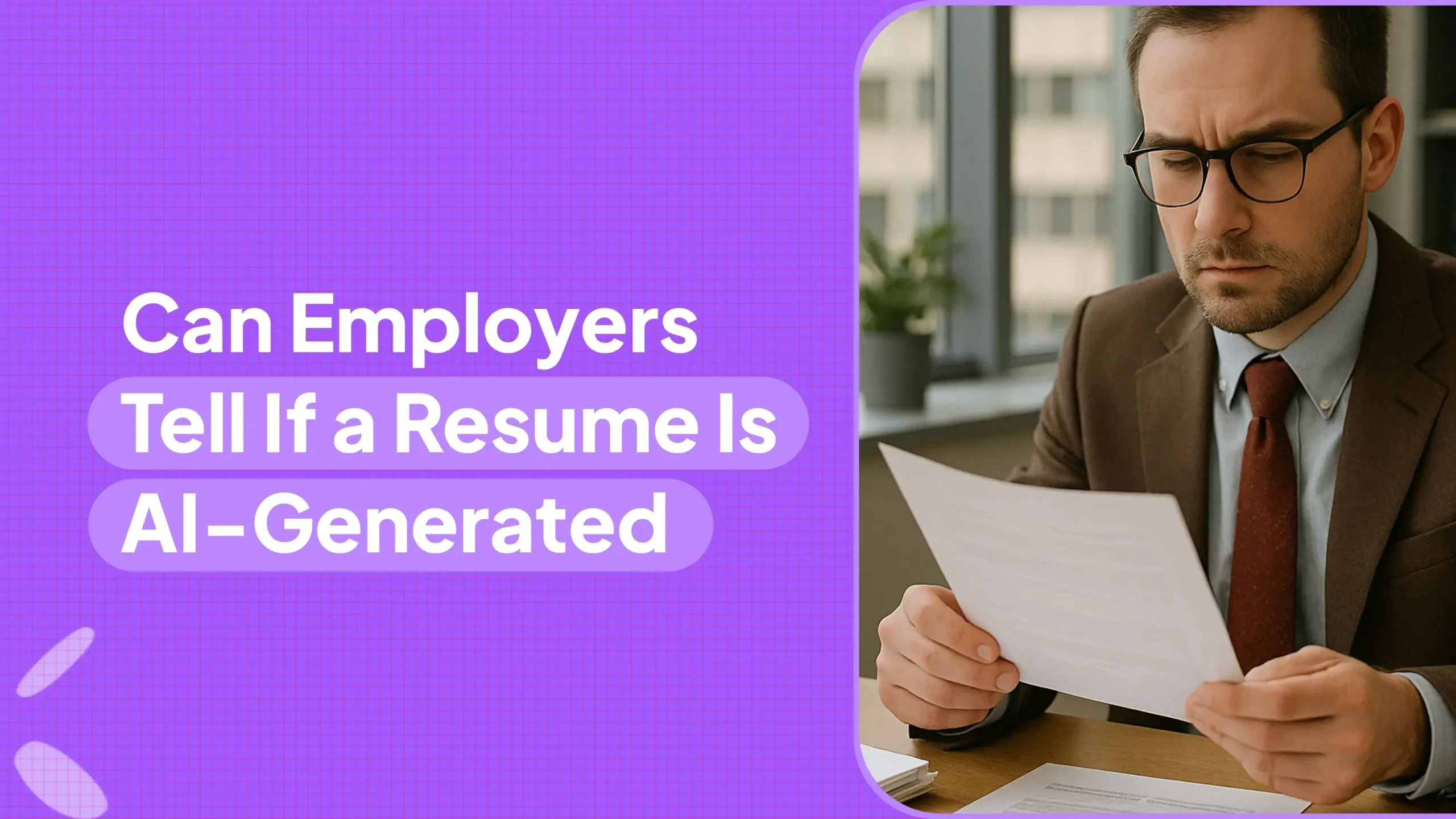
AI is changing how we write, search, and apply for jobs – and resumes are no exception. With tools like ChatGPT, resume builders, and AI-powered job platforms, creating a professional-looking resume has never been faster.
But here’s the catch: can employers tell if your resume was written by AI? And if they can… does it hurt your chances?
That’s what this article explores – and the answer isn’t as simple as yes or no.
AI Isn’t the Problem – How You Use It Is
Let’s get one thing straight: using AI to help write your resume isn’t a red flag. Recruiters don’t reject candidates just because AI was involved. They care about clarity, relevance, and whether your resume actually shows your value.
What does raise red flags? Resumes that feel copy-pasted, vague, or overloaded with clichés. And yes, those can be AI-written – but so can resumes that are sharp, specific, and well-structured.
The key isn’t avoiding AI. It’s using it well.
That’s where smarter tools like LiftmyCV come in. Instead of dumping out generic text, LiftmyCV helps you:
- Tailor your resume to each job
- Highlight real achievements
- Match keywords for ATS systems
- And keep your tone clear and human
You’re still in control – the AI just helps you move faster and write better.
What Recruiters Actually Notice – Not Whether AI Wrote It
What Recruiters Look For
Recruiters spend an average of just seven seconds scanning each resume. With such a tight timeframe, their attention zeroes in on the content, not how the resume was crafted.
Jeremy Schifeling, founder of The Job Insiders, highlights what truly grabs a recruiter’s eye:
“As a hiring manager, the first thing I’m always looking for is evidence of specific accomplishments”.
Here’s what recruiters prioritize:
- Measurable achievements that demonstrate impact.
- Skills that align with the job description.
- Career progression that shows growth and development.
- Keywords tailored to the specific role.
One thing hiring managers spot immediately? Buzzwords without substance. Schifeling puts it bluntly:
“Wow – this candidate excels at buzzwords, yet fails at effective marketing”.
Now, let’s explore how recruiters combine manual review with technology to evaluate resumes and detect potential AI influences.
AI Detection Tools in Hiring
While authenticity is a top concern, most employers don’t rely on AI detection software to flag resumes. Instead, they focus on identifying signs of a lack of personalization.
Career coach Phoebe Gavin explains that resumes often look alike because they’re generated using the same prompts. It’s not AI usage itself that raises red flags – it’s the uniformity.
HR executive James Hudson offers this advice:
“Use AI as a tool in your toolbox…the final product should still be edited and amended by you because only you know your career”.
What tends to stand out to recruiters:
- Resumes missing specific context about past roles.
- Inconsistent career narratives that don’t tell a clear story.
- A lack of job-specific details that make the resume feel generic.
Gavin also points out a common perception among recruiters:
“They actually interpret them as being more likely to have lies…They think they’re more dishonest because they’re sort of assuming that the person is just saying what they need to say to get a callback”
The bottom line? Employers care most about whether your resume communicates your unique value. As Hudson notes:
“You’re eroding your competitive advantage when you don’t manually include those details”
Red Flags That Make Your Resume Feel AI-Generated
Common AI Resume Problems
Recruiters are getting better at identifying resumes that feel like they were written by a machine. Software Developer David Bolton puts it this way:
“The main problem is not using AI to write your CV (honestly, a lot of folks these days are relying on AI for their first draft) but leaving in the obvious AI bits. Add a personal touch, with anecdotes about what you did including specific achievements that show you as ideally suited for the role you’re applying for. It’ll help convince the hiring managers and recruiters that you are, indeed, human.
Here’s what often gives AI-generated resumes away:
Monotonic Language Patterns
AI-written content tends to have repetitive sentence structures and word choices, which can make the text feel robotic and flat.
Buzzword Overload
AI tools frequently lean on overused phrases pulled from their training data, such as:
- “Results-driven professional”
- “Team player”
- “Excellent communicator”
While these phrases sound polished, they lack depth and fail to reflect the unique qualities or experiences that make a candidate stand out. Additionally, AI-generated resumes often miss the details that connect directly to the specific job.
Missing Job-Specific Details
Another red flag is the lack of personalization, which shows up in a few key ways:
- Vague Achievements: Instead of using the STAR method (Situation, Task, Action, Result) to describe accomplishments, AI-generated resumes often include generic statements that lack impact.
- Absence of Context: They fail to provide measurable results or meaningful insights into the candidate’s career journey.
- Generic Skills: Skills are listed broadly, with no connection to specific projects or practical applications.
Career coach Phoebe Gavin highlights the risks of this approach:
“they actually interpret them as being more likely to have lies”
The takeaway? Using AI to draft a resume isn’t the issue – it’s failing to refine and personalize it afterward. By adding your unique achievements and tailoring the content to the role, you’ll not only appeal to human recruiters but also improve how Applicant Tracking Systems view your resume.
Do ATS Systems Detect AI-Generated Resumes? Here’s What Matters
How ATS Reviews Resumes
Applicant Tracking Systems (ATS) are now a staple in the hiring process, with more than 75% of companies relying on them to simplify recruitment tasks. These systems don’t differentiate between AI-written or human-written resumes. Instead, they focus on parsing resumes into structured data and analyzing them based on keywords and formatting.
Here’s how ATS evaluates resumes:
- Keyword Matching: ATS scans for job-specific terms, relevant skills, and industry-related phrases that align with the job description.
- Standard Formatting: The software extracts essential sections like contact details, work experience, education, skills, and certifications to assess the resume efficiently.
A Harvard Business School study revealed that 88% of employers believe their ATS systems unintentionally filter out qualified candidates who don’t perfectly match the job description. While human recruiters value creativity and personal touches, ATS systems prioritize structure and relevance, making it crucial to balance both when crafting a resume.
With these criteria in mind, let’s explore how AI-generated resumes perform within ATS systems.
AI Resumes and ATS Performance
When optimized correctly, AI-generated resumes can perform well in ATS systems. Recent data shows that 99.7% of recruiters use filters in their ATS to screen candidates, focusing on specific criteria [5]:
| Filter Type | Percentage of Recruiters |
|---|---|
| Skills | 76.4% |
| Education | 59.7% |
| Job Titles | 55.3% |
| Certifications | 50.6% |
| Years of Experience | 44.0% |
Resume expert Robert Henderson emphasizes the importance of keyword optimization:
“Using the right keywords helps your resume get seen and gives you a better shot at landing interviews”
To improve ATS performance, consider these strategies:
- Match Job-Specific Requirements: Including the exact job title from the job posting can make candidates 10.6 times more likely to secure an interview.
- Keep Formatting Simple: Use clear headers, standard fonts, and straightforward bullet points to ensure the resume is ATS-friendly.
ATS systems don’t detect or penalize AI-generated content – they focus entirely on how well the resume aligns with the job description and whether it’s formatted for easy parsing.
How to Fix AI-Written Resumes So They Look Human and Get Read
Editing AI Content
AI tools can craft a basic resume framework, but to truly make your application shine, you’ll need to polish it. Refining the AI-generated content ensures it reflects your unique experiences and skills accurately.
Key steps to focus on:
- Cut out generic phrases and overused buzzwords.
- Add specific details tailored to your roles and accomplishments.
- Double-check every detail for accuracy.
- Infuse the document with your personal tone and style.
Taking these extra steps not only improves clarity but also helps your resume stand out. Don’t forget to include quantifiable achievements to make a stronger impression.
Adding Performance Metrics
Generic statements don’t grab attention, but measurable accomplishments do. Including performance metrics not only makes your resume more engaging for recruiters but also improves its chances of passing Applicant Tracking Systems (ATS).
“In a sea of task-oriented resumes, achievement-focused [resumes] stand out. They demonstrate a candidate’s proven ability to deliver results”.
Here are some examples of how to turn tasks into metrics-driven achievements:
| Role | Measurable Achievement |
|---|---|
| Software Engineer | Created an algorithm that cut processing time by 50%, boosting overall efficiency. |
| Customer Service | Improved satisfaction scores by 20%, which led to a 15% increase in customer retention. |
| Product Manager | Delivered a roadmap that resulted in a 30% increase in product adoption rates. |
| Web Developer | Designed A/B testing strategies that raised conversion rates by 15%. |
“We don’t want someone who quietly did acceptable work; we want someone who actively made their organization better by taking the initiative and going beyond the limits of their job description”
Tailoring to Job Descriptions
Once you’ve refined your resume and added measurable results, it’s time to customize it for each job you’re applying to. Tailoring your resume ensures it matches the specific requirements of the role and demonstrates your fit.
Here are three strategies to make your resume job-specific:
- Keyword Integration
Carefully read the job description and identify key terms or phrases. For instance, if “project management” is emphasized, highlight specific projects you’ve led, rather than just listing the skill. - STAR Method Application
Use the Situation, Task, Action, Result (STAR) format to frame your achievements. This approach turns AI-generated text into compelling stories that showcase your impact. - Industry Alignment
Adjust your resume to reflect the terminology and challenges relevant to the industry or company. Addressing specific issues mentioned in the job posting shows both your expertise and your attention to detail.
LiftmyCV Creates Tailored Resumes and Cover Letters for Each Role
Resume Scoring System
LiftmyCV’s AI-powered profile scanner takes your resume and evaluates it based on what recruiters and applicant tracking systems (ATS) prioritize. It looks at things like keyword usage, how well you quantify achievements, professional formatting, and the overall clarity of your content. This targeted feedback helps you fine-tune your resume so it not only passes ATS filters but also grabs the attention of recruiters – all while keeping your application genuine and easy to read.
Job-Specific Resume Builder
LiftmyCV’s resume builder is designed to adapt your application to specific job postings automatically. By syncing with popular job boards and ATS platforms like Lever, Workable, and LinkedIn, it adjusts your resume to emphasize the skills and experiences that matter most for each role. With the help of ChatGPT-4-powered autofill, it balances personalization with efficiency, ensuring your resume feels tailored without losing your unique voice.
Resume Enhancement Features
LiftmyCV provides additional tools to fine-tune your resume, addressing common issues found in generic templates and AI-driven content:
| Feature | Purpose | Impact |
|---|---|---|
| AI Profile Scanner | Assesses resume quality and ATS compatibility | Improves chances of passing pre-screening filters |
| Multi-Platform Submission | Adjusts resume format for different ATS systems | Ensures proper parsing across platforms |
| Custom Filters | Focuses on specific job criteria | Helps create targeted, role-specific applications |
These tools make sure your resume is polished and effective across various job search platforms, including LinkedIn Jobs, Monster, and others – all while retaining a polished, professional tone that stands out.
BONUS VIDEO: Can You Get Rejected For Using A ChatGPT Resume? (AI Detection)
Conclusion: AI + You = A Stronger Resume – If You Edit It Right
AI-generated resumes aren’t an all-or-nothing solution – they just need a personal touch to truly shine. With thoughtful editing and customization, AI becomes a helpful ally in your job search rather than a potential stumbling block.
As mentioned earlier, relying solely on AI’s uniform output can overlook what makes you stand out. The key is blending the efficiency of technology with the depth of your own experiences and insights.
Tools like LiftmyCV make this process easier. With features like resume scoring, job-specific builders, and editing options, they help transform a basic draft into a polished, tailored resume. These tools ensure your resume aligns with ATS requirements while highlighting the achievements that genuinely matter to recruiters. It’s this mix of precision and individuality that helps you stand out.
When you balance AI’s capabilities with your personal input, both ATS systems and hiring managers take notice. The goal is to use technology as a way to enhance – not replace – your ability to tell your career story. With the right adjustments, your resume can reflect your unique journey while meeting the professional standards today’s hiring processes demand.


FAQ
Can recruiters really tell if my resume was written by AI?
Usually, no. Most recruiters don’t use AI-detection tools – and even if they did, they care more about content quality than how it was written. As long as your resume is relevant, clear, and tailored, using AI isn’t a problem.
Do ATS systems detect or penalize AI-written resumes?
No. ATS platforms scan for keywords, formatting, and match score. They don’t detect whether the resume was written by a human or AI – they care whether it fits the job description.
What makes an AI-generated resume obvious?
Generic phrases, lack of achievements, buzzword stuffing, and vague job descriptions are all signs. These are easy to fix by editing the content and adding real examples.
Will I be rejected for using ChatGPT to write my resume?
Not if you edit and personalize the output. Recruiters care about clarity and relevance. A ChatGPT draft is a good starting point – but don’t send it without review.
How can I use AI to write a resume that feels human?
Use tools like LiftmyCV that tailor your resume to the job description and let you review everything before submitting. Focus on adding numbers, context, and your own voice.
Read Next
Simplify Jobs Review: The Chrome Extension, Pricing & Alternatives
A Simplify Jobs review of the Chrome extension, pricing, and how it works, plus the best Simplify alternative that adds hands-off auto-apply to AI job matching.
AIApply Review: Pricing, Features & the Best Alternative
An AIApply review covering pricing, features, and whether it is worth it, plus the best AIApply alternative for hands-off, high-volume auto-applying.
AI Resume Summary Generator: How to Write One (With Examples)
An AI resume summary generator writes a tailored professional summary in seconds. Get resume summary examples for career changers, grads, and pros.