
Resume Tailoring: How to Optimize a Resume for the Job Description
Resume tailoring in practice: how to optimize a resume for the job description, the resume optimization tips that matter, and what you can skip.
Resume tailoring is the difference between a resume that exists and one that gets read. The applicant tracking system ranks you on the terms the posting names, so a single generic file loses to a version shaped for the job every time. This is how to optimize a resume for the job description, which resume optimization tips are worth the effort, and where AI does the tedious half.
- Why It Matters: Over 80% of resumes fail ATS filters, and 75% are rejected before a recruiter sees them. Optimized resumes are 40% more likely to catch attention.
- How It Works: AI tools analyze job descriptions, suggest keywords, improve formatting, and focus on measurable achievements.
- Key Tips:
- Use simple formatting (standard fonts, no tables/graphics).
- Include job-specific keywords naturally.
- Highlight quantifiable results (e.g., “Increased sales by 45%”).
- Top AI Tools: Examples include Rezi, Resume.io, and BeamJobs, offering features like ATS checks and keyword analysis.
- Common Mistakes to Avoid: Avoid complex formatting, unapproved fonts, and missing keywords, which can cause ATS errors.
Optimizing your resume for both AI and human reviewers is now essential for job search success.
What Resume Tailoring Actually Changes
AI Resume Analysis Process
Understanding how AI-driven resume analysis works is essential for creating a resume that performs well with Applicant Tracking Systems (ATS). These systems use algorithms to evaluate candidate qualifications and filter resumes.
AI Resume Screening Basics
ATS have become a cornerstone of modern hiring practices, with 98.8% of Fortune 500 companies relying on them to speed up candidate screening. These systems typically assess resumes based on:
- Keyword relevance and context: Ensuring your resume matches the job description.
- Format compatibility: Making sure the document can be easily read by the system.
- Content quality: Highlighting your qualifications and accomplishments effectively.
Let’s dive into how AI can go beyond screening to help fine-tune your resume.
Resume Improvement Through AI
AI tools are designed to compare job descriptions with your resume, pinpointing areas for improvement. Here’s how they can help:
- Keyword Analysis: AI identifies missing key terms and suggests where to include them naturally. For instance, if a software engineering role emphasizes Java expertise, the tool might recommend adding “Java” to your skills or work experience sections.
- Format Guidelines: These tools ensure your resume is ATS-friendly by recommending standard fonts (like Arial or Calibri), single-column layouts, clear headers, and avoiding elements like tables or graphics.
- Content Suggestions: AI strengthens your resume by focusing on measurable achievements, action verbs, and relevant metrics. This makes your accomplishments stand out to both machines and humans.
Major ATS Tools in Use Today
Many modern ATS platforms now include AI features to make resume screening more effective. These systems consider factors like career progression, industry-specific skills, and overall professional development. Interestingly, nearly 90% of hiring managers expect candidates to use AI tools to refine their resumes.
For job seekers, understanding how these tools work matters. A well-crafted resume should perform well in both automated systems and manual reviews.
How to Optimize a Resume for the Job Description
Creating a resume that works well with an Applicant Tracking System (ATS) means focusing on clear formatting, relevant keywords, and measurable achievements. Since ATS technology is widely used, nailing these aspects decides whether a human ever reads the file.
Tips for ATS-Friendly Formatting
Start with a simple, clean layout. Professional Resume Writer Jazlyn Unbedacht explains:
“There is no more sure-fire way to get your resume lost in an ATS than to clutter your resume with graphics, tables, and creative fonts”.
Jazlyn Unbedacht
To make your resume ATS-compatible:
- Stick to standard fonts like Arial, Calibri, or Times New Roman (10-12 point size).
- Use 1-inch margins on all sides.
- Organize sections with clear headers.
- Save your file as .docx or .txt.
- Avoid headers, footers, tables, graphics, or other non-standard elements.
This straightforward design ensures the ATS can easily read your resume and sets the stage for keyword optimization.
Using Keywords Effectively
Since 88% of companies rely on ATS to screen resumes, missing key terms could mean your application gets overlooked. Here’s how to make sure your resume includes the right keywords:
- Analyze the job description to find terms related to:
- Technical skills
- Soft skills
- Industry jargon
- Certifications
- Key responsibilities
- Place keywords strategically in sections like:
- Professional summary
- Skills list
- Work experience details
- Education and certifications
- Incorporate keywords naturally into your descriptions. For example, instead of just listing “financial analysis”, say you “conducted financial analysis of quarterly reports, leading to a 15% cost reduction.”
Once you’ve nailed formatting and keywords, it’s time to focus on showing measurable results.
Highlighting Measurable Achievements
Quantifying your work makes your resume more appealing to both ATS and hiring managers. Compare these examples to see the difference:
| Basic Statement | Quantified Achievement |
|---|---|
| Managed social media | Boosted social media engagement by 50% in 6 months, increasing followers by 35% |
| Improved SEO | Achieved top Google ranking (from 10th to 1st) for 5 key industry terms |
| Conducted research | Surveyed 1,000+ customers, improving satisfaction scores by 15% |
To make your accomplishments stand out:
- Include specific numbers (percentages, dollar amounts, etc.).
- Add timeframes to show impact.
- Highlight efficiency gains or revenue growth.
- Specify the scale of your responsibilities or projects.
AI Resume Tools Review
AI resume tools are designed to help job seekers create resumes that can pass Applicant Tracking Systems (ATS). Here’s a closer look at some of the most effective options available right now.
Current AI Resume Tools
Several AI-powered resume builders stand out for their unique features. For instance, Teal offers a pipeline system to manage multiple applications, while Enhancv provides AI-driven support for crafting resumes and cover letters.
Resume expert Rebecca Paquette notes:
“AI tools offer valuable assistance in streamlining the resume writing process, but they should be used in conjunction with human expertise.”
Here’s a quick comparison of some top-rated tools based on user reviews and standout features:
| Tool | Rating | Key Strength | Notable Feature |
|---|---|---|---|
| Resume.io | 9.1/10 | Template Design | AI Optimization Engine |
| LiftmyCV | 9.0/10 | Job Search | Auto-Apply Feature |
| BeamJobs | 8.7/10 | Keyword Analysis | ATS Compatibility Check |
| Huntr | 8.2/10 | Content Creation | Work Experience Generator |
Let LiftmyCV Tailor Each Application
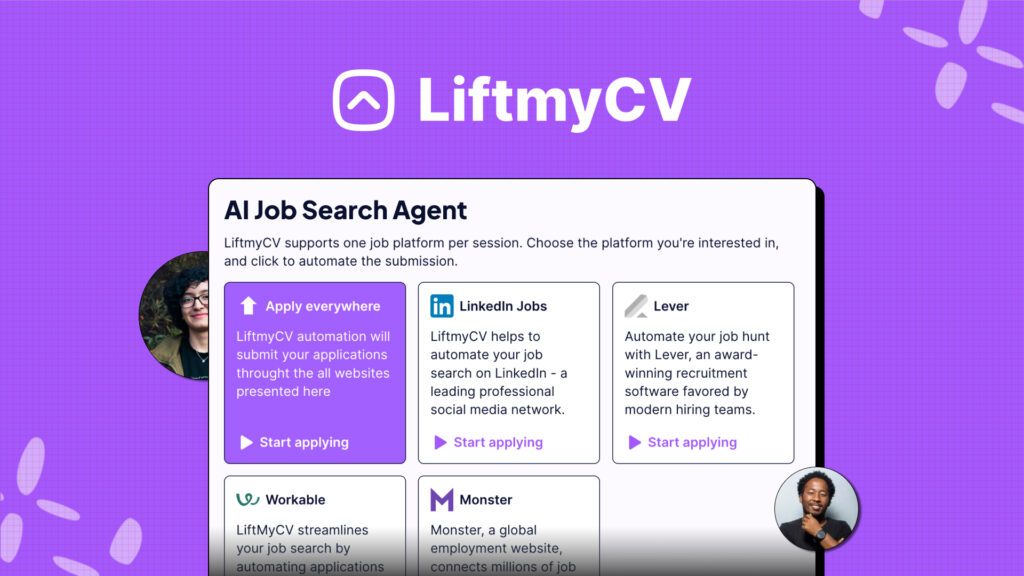
LiftmyCV simplifies submitting of job applications by automating the process 24/7 across multiple platforms, like LinkedIn Jobs, Lever, Workable, Monster, Breezy, Recruitee, and Ashby. Here’s a breakdown of its pricing plans:
| Plan | Price | Applications | Model |
|---|---|---|---|
| 50 Lifts | $4.99 | 50 Monthly CV submissions | Subscription |
| 500 Lifts | $14.99 | 500 CV submissions | Pay-as-you-go |
| 1000 Lifts | $24.99 | 1,000 CV submissions | Pay-as-you-go |
| 2000 Lifts | $39.99 | 2,000 CV submissions | Pay-as-you-go |
The platform connects to major job boards, offering features like AI-powered autofill and custom filters to refine job searches.
Free vs. Paid Tool Differences
Deciding between free and paid tools depends on how many features you need and the volume of your job applications. With 97.4% of Fortune 500 companies using ATS systems, choosing the right tool can make a big difference.
Here’s how free and paid tools stack up:
| Feature | Free Tools | Paid Tools |
|---|---|---|
| Templates | Limited selection | Extensive library |
| ATS Optimization | Basic scanning | Advanced keyword matching |
| AI Features | Generic suggestions | Personalized content generation |
| Export Options | Limited formats | Multiple formats available |
| Support | Basic documentation | Premium customer service |
Premium tools like Rezi ($29/month) and Hiration ($20/month) include advanced capabilities such as job description parsing and ChatGPT-powered content creation. On the other hand, free tools like Kickresume and Resume Worded provide basic functionality but come with restrictions.
Industry expert Miguel Rebelo sums it up well:
“AI gets the ball rolling, but it’s up to you to score the goal.
This highlights the importance of using AI tools as a supplement to your resume-building efforts, not as a complete replacement.
Resume Optimization Tips That Hold Up
Matching Job Requirements
Using exact job title matches in your resume headline can make you 3.5 times more likely to land an interview.
| Requirement | Strategy | Effect |
|---|---|---|
| Technical Skills | Use exact terms from job posting | Boosts ATS matching accuracy |
| Job Titles | Mirror posting terminology | Increases interview chances |
| Industry Terms | Include full terms and acronyms | Improves parsing accuracy |
| Qualifications | Highlight relevant certifications first | Strengthens qualification scoring |
“Optimizing your résumé for AI isn’t bypassing human judgment; it’s about making sure you get to the stage where a human evaluates your qualifications. Once you get there, you can show them why you’re the right fit.”
While aligning your resume with job requirements increases visibility, avoiding common screening pitfalls is just as important.
Common AI Screening Errors
A staggering 88% of executives admit that AI tools often screen out qualified candidates by mistake.
| Error Type | Impact | Solution |
|---|---|---|
| Overly Complex Formatting | ATS parsing failure | Stick to basic formatting like bold and bullets |
| Unapproved Fonts | Text misinterpretation | Use standard fonts like Arial or Times New Roman |
| Tables/Graphics | Information gets lost | Convert content to plain text |
“The black hole exists pre-technology. The resume black hole oftentimes just has to do with the fact that companies are, quite frankly, just ignoring certain pools of candidates. And that’s been true for a long time.”
Fixing these errors ensures your resume is correctly processed by both AI systems and human reviewers.
Writing for AI and Humans
With more than 80% of resumes failing to pass ATS systems, tailoring your content to meet both algorithmic and recruiter expectations is essential.
Focus on these key elements:
| Element | AI Optimization | Human Appeal |
|---|---|---|
| Keywords | Match the job description | Blend naturally into your content |
| Metrics | Include specific numbers | Present as compelling achievements |
| Skills | List required competencies | Show how they’re applied in practice |
| Structure | Use ATS-friendly formatting | Ensure a clean, easy-to-read layout |
For example, write: “Increased quarterly sales by 45% ($250,000) by implementing a new CRM system.”
Balancing the needs of both AI and human reviewers is the foundation for creating a resume that stands out.
AI Resume Tools: What’s Next
New AI Resume Features
AI-powered resume tools are advancing quickly, adding features that make job applications more precise and effective. For instance, Best Resume AI now claims 99% accuracy and increases keyword saturation by 250%.
| Feature | Current Capability | Future Potential |
|---|---|---|
| Personalization | Job-specific tailoring | Real-time alignment with company culture |
| Skills Analysis | Keyword matching | Predictive skill recommendations |
| Multimedia Integration | Basic formatting | Interactive portfolios |
| Verification | Manual credential listing | Automated credential checks |
“At Best Resume AI, we don’t just help you outsmart job search algorithms; we make you the stand-out candidate for the role.”
These advancements are reshaping how resumes are crafted and evaluated, paving the way for changes in hiring practices.
AI’s Impact on Hiring
Enhanced resume tools are pushing employers to rethink how they evaluate candidates. With many resumes filtered out before reaching human reviewers, companies are adjusting their methods to identify top talent.
Carnegie Mellon University is leading the charge by offering resources tailored to AI-driven job searches. Sean McGowan, director of employer relations at Carnegie Mellon University’s Career and Professional Development Center, explains: “We’re trying to help these students not just find a job for right now, but to train them on important skills that they will need.”
| Impact Area | Current Approach | Emerging Trend |
|---|---|---|
| Application Volume | High volume, low quality | Focused, targeted submissions |
| Screening Process | Basic keyword filtering | Full skill evaluations |
| Candidate Communication | Limited automation | Personalized AI-driven interactions |
| Hiring Decisions | Algorithm-based | Hybrid AI and human assessments |
These shifts highlight the need for job seekers to adapt their strategies to stay competitive.
Preparing for New AI Tools
Khaled Hussein, co-founder and CEO of Betterleap, emphasizes: “A well-crafted human resume remains indispensable.”
| Strategy | Execution | Outcome |
|---|---|---|
| Skills Documentation | Regularly update skills | Better alignment with emerging roles |
| Data-Driven Content | Highlight measurable results | Improved AI parsing and matching |
| Format Optimization | Use clean, ATS-friendly layouts | Higher success in initial screenings |
| Personal Branding | Maintain a consistent image | Stronger alignment with company culture |
TopResume captures the essence of this evolution: “Imagine having a resume that naturally adapts to each job you apply for – no painstaking edits required.”
The next wave of AI resume tools promises smarter, more personalized job applications while keeping the focus on balancing technology with human authenticity.
Conclusion
AI-powered resume tools are reshaping the job market, especially as over 97.4% of Fortune 500 companies now rely on Applicant Tracking Systems (ATS). These tools use advanced, data-driven methods to help candidates showcase their skills more effectively.
Take LiftmyCV as an example. Dan Zaitsev, CEO & Founder of LiftmyCV, shared:
“Our engineering team spent over a year refining LiftmyCV to create the best job search AI agent and auto-apply tool on the market. For me, that was a clear signal that our product was ready for a global launch.”
Some key stats highlight the value of AI in resume optimization:
- Resumes tailored to specific jobs are 90% more likely to secure interviews.
- AI-optimized resumes can improve keyword relevance by up to 250%.
- More than 80% of traditional resumes fail ATS screening.
Users are seeing real results. Kim, a Data Scientist, noted:
“Best Resume AI helped me refine my resume for ATS. It’s impossible to ‘keyword saturate’ a resume for a job post. Thank you, what fantastic service!”
These tools simplify the job search process and help candidates present their qualifications more effectively. The challenge now is to balance AI’s efficiency with maintaining a personal touch. Mastering these tools is quickly becoming a must for anyone aiming to succeed in a competitive job market.


FAQ
What is resume tailoring?
Rewriting a base resume so its wording matches a specific job description: the skills it names, the tools it lists, the title it uses. The parser stores those terms, and the recruiter searches on them.
How do you optimize a resume for the job description?
Read the posting, list the skills and tools it names, then mirror that exact phrasing wherever it honestly applies to you. Keep the layout single-column so the parser reads the terms it finds.
How long does resume tailoring take?
Fifteen to twenty minutes by hand for each posting, which is why most people stop doing it by the tenth application. That repetition is the part worth handing to a tool.
Read Next
AI Resume Summary Generator: How to Write One (With Examples)
An AI resume summary generator writes a tailored professional summary in seconds. Get resume summary examples for career changers, grads, and pros.
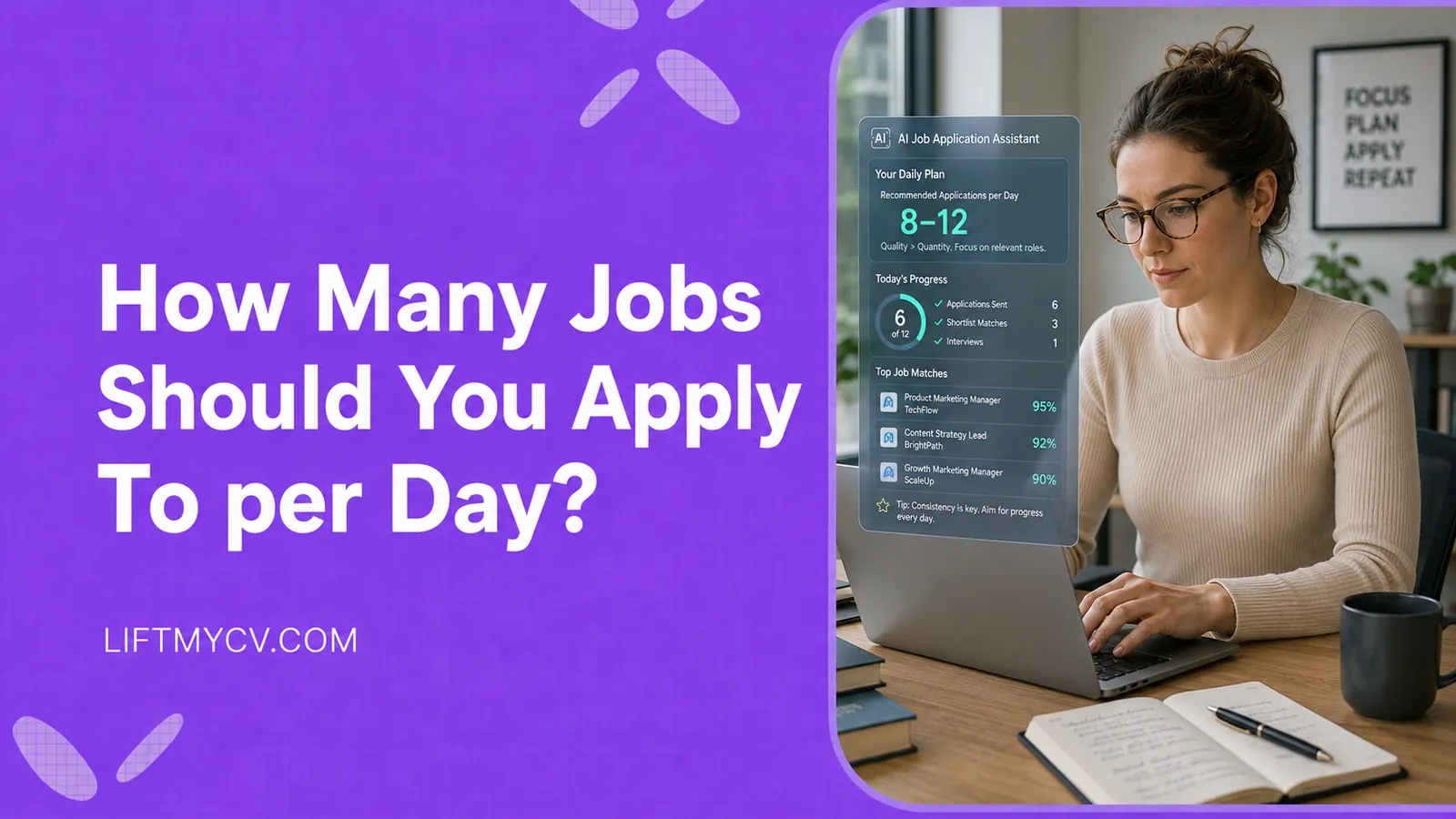
How Many Jobs Should You Apply To per Day? The Honest Answer
The real daily number, why consistency beats big bursts, and how to hit your target without burning out.
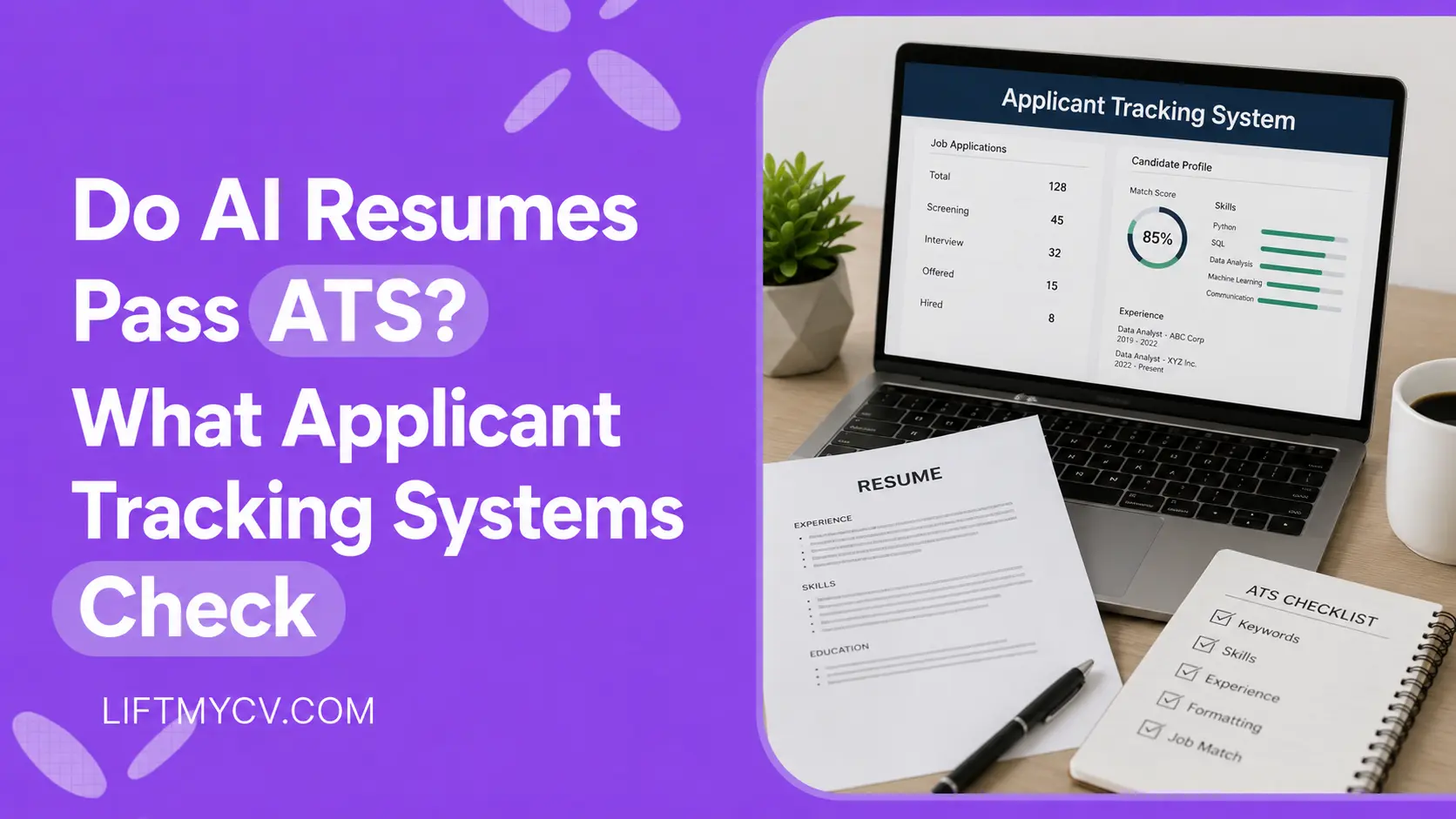
Do AI Resumes Pass ATS? What Applicant Tracking Systems Check
ATS does not detect AI. See what it checks, why some AI resumes get rejected, and how to make yours pass the screen.