
How to Get a Job at Apple: An Insider’s Guide
Unlock proven strategies, recruiter tips, and expert insights for landing your dream job at Apple in 2025. Updated advice for every Apple role.
Apple stands at the pinnacle of global tech employers, routinely attracting tens of thousands of job applications for every open role. According to recruiter insights and application statistics, less than 2% of software engineering candidates ultimately get hired – a selectivity rate on par with elite universities (source). What’s behind this extreme competition, and how does Apple decide who belongs on its legendary teams?
Apple’s hiring philosophy goes far beyond technical skills. CEO Tim Cook and Apple recruiters have publicly emphasized the company’s preference for “creative, curious people who ask great questions, not just those with perfect grades or résumés.” Apple wants “workhorses, not show horses” – people who obsess about improving products, quietly collaborate across teams, and genuinely care about Apple’s mission and user experience (source).
Expert Says:
“Apple doesn’t just look for the best coder or designer – they look for the best collaborator, someone who can work across boundaries and keep a sense of humility,” says Daniel Harten, a former Apple recruiter (source).
What to Expect in This Guide:
This insider’s guide will break down, role by role, what it takes to join Apple’s elite teams – covering typical qualifications, key skills, portfolio and interview strategies, unique Apple culture factors, and global considerations. Drawing on recruiter interviews, job listing analysis, and firsthand candidate reports, you’ll find up-to-date, actionable advice for:
- Software Engineering
- Hardware Engineering
- Product Design (UI/UX)
- Marketing & Communications
- Business & Operations
- Retail (Apple Store)
- Corporate Functions (HR, Finance, Legal)
Apple’s Core Values in Hiring:
- Creativity and Curiosity: Apple expects candidates to bring original thinking and a hunger to learn, not just a history of “checking boxes.”
- Collaboration and Humility: The company is renowned for a “no-ego” culture; team fit and communication matter as much as pure talent.
- Customer Obsession: Every role, from engineer to store specialist, is expected to put the user first.
Next:
In the following sections, we’ll explore each Apple job category in depth – beginning with what it really takes to stand out as a software engineer at Apple in 2025, from portfolio tips to interview preparation and skills that matter most.
What It Takes to Stand Out as a Software Engineer at Apple in 2025

Understanding Apple’s Software Engineering Roles – Beyond Coding Tests and Résumé Keywords
Apple’s software engineering roles – whether for iOS, macOS, AI/ML, cloud, or platform security – are among the most coveted in tech. Yet, even among top-tier candidates, most never get past the initial resume screening. Why? Because Apple’s expectations go far beyond a list of languages or big-company job titles.
Expert Says:
“Don’t just check boxes. Apple is looking for engineers who demonstrate creativity, who go beyond the minimum requirements, and who show a real passion for the user experience,” says Michael Solomon, a technical recruiter who’s helped candidates land roles at Apple (source).
Key Technical Skills and Qualifications Apple Looks For (2025):
- Mastery of Core Programming Languages: Swift and Objective-C are essential for iOS; C/C++/Python for hardware, systems, or AI teams.
- Full-Stack Understanding: Even if your focus is on frontend or backend, Apple values engineers who understand how their work fits into the larger architecture.
- Algorithmic and Problem-Solving Skills: Expect whiteboard interviews and coding tests focused on efficiency, data structures, and creative solutions (source).
- Experience with Apple’s Ecosystem: Familiarity with Xcode, Apple APIs, and designing for Apple’s Human Interface Guidelines sets candidates apart (source).
Portfolio and Résumé Tips – How to Catch Apple’s Eye
- Show Impact, Not Just Tasks: Quantify your achievements (e.g., “Reduced app crash rates by 20%,” or “Improved launch performance for 1M+ users”).
- Highlight Collaborative Projects: Apple puts a premium on cross-team experience and evidence you’ve worked in large, multidisciplinary environments (source).
- Open Source and Side Projects: Many Apple engineers say their interviews included questions about open source, hackathons, or unique personal projects.
Apple’s Technical Interview Process in 2025 – What to Expect
- Phone Screen: Often includes algorithmic challenges and deep dives into your experience.
- Technical Interviews (Virtual or Onsite): Expect 3-6 rounds of coding, design, and behavioral questions. For senior roles, system design and cross-team scenario questions are common.
- Team Fit Interviews: Apple wants to see curiosity, humility, and the ability to receive and give constructive feedback.
Comparison Table: Apple Software Engineering vs. Other FAANG Companies (2025)
| Criteria | Apple | Meta | |
| Focus on User Experience | Extremely High | High | Moderate |
| Weight on Collaboration | Very High | High | Moderate |
| Emphasis on Creativity | High | High | Moderate |
| Typical Technical Screenings | 3-6 Rounds, Algorithms, UX | 3-5 Rounds, Algorithms, SD | 3-5 Rounds, Coding, SD |
| Must-Know Tech | Swift, Obj-C, Apple APIs | Python, Java, C++ | Python, Hack, React |
SD = System Design
Hardware Engineering, Product Design, and UX Roles at Apple
Apple’s Approach to Hardware and Design – Why It’s Unlike Any Other Tech Company
Apple is world-renowned for its relentless pursuit of design excellence and hardware innovation. Whether you’re applying as an electrical engineer, mechanical engineer, product designer, or UX/UI specialist, it’s critical to understand that Apple expects you to merge technical mastery with bold, user-first creativity. “Apple’s design and hardware teams are famous for sweating the details – from the curve of an iPhone corner to the way a hinge feels on a MacBook,” notes Kickresume’s Apple guide (source).
What Makes Apple’s Hardware and Product Design Interviews Different?
- Cross-Disciplinary Thinking: You’ll be expected to work closely with software, manufacturing, and supply chain teams. Candidates who can show a history of thriving in multi-team projects are favored.
- Portfolio Focus: Apple’s interviewers will often ask for your design process step-by-step – expect to whiteboard your thinking, critique your own work, and answer “what would you improve?”
Pro tip from Apple recruiter: “We want to see your design decisions and understand how you listen to feedback and iterate – not just your finished product.” (source) - Extreme Precision and User Obsession: In hardware interviews, expect technical problem-solving – often about reliability, miniaturization, or manufacturing constraints. In design interviews, expect questions about accessibility, inclusivity, and real-world use.
Key Skills and Portfolio Elements Apple Seeks in 2025
- Breadth in Design Tools: Expertise in Figma, Sketch, CAD tools (for hardware), and familiarity with Apple’s Human Interface Guidelines is highly valued (source).
- Prototyping and Testing: Show projects where you rapidly iterated designs based on feedback or usability testing.
- Documented Impact: Metrics matter – share examples such as “improved usability score by 25%,” “reduced cost per unit,” or “reduced user error rates.”
Comparison Table: Product Design and UX Roles – Apple vs. Google vs. Microsoft (2025)
| Criteria | Apple | Microsoft | |
| User Experience (UX) | Non-negotiable, holistic | High, often data-driven | High, enterprise-focused |
| Design-Engineering Balance | Integrated, daily sync | Design-led, but parallel | Engineering often leads |
| Hardware Collaboration | Core part of role | Rare (mostly Nest/Pixel) | Present, but less frequent |
| Portfolio Review | Deep, process-focused | Emphasizes shipped products | Mix of both |
| Must-Know Guidelines | Apple HIG, Accessibility | Google Material, WCAG | Fluent Design, Accessibility |
What Candidates Say About the Process
“Apple interviewers are kind but exacting – they’ll ask you to walk through design tradeoffs in excruciating detail. One round was just about accessibility improvements for visually impaired users,” recalls a former candidate (source).
How LiftmyCV Helps You Land Jobs at Apple and Top FAANG Companies
Getting noticed by Apple, Google, Meta, or other top tech employers takes more than a generic resume. LiftmyCV is designed to give you an edge in the world’s toughest application processes, with features built specifically for high-bar, ATS-driven environments.
Here’s how LiftmyCV empowers your FAANG job search:
- ATS Resume Builder: Instantly create a professional, ATS-optimized resume that meets the screening standards of Apple and other major tech companies. LiftmyCV ensures your resume uses the right format, keywords, and structure for both human recruiters and automated systems.
- AI-Powered Cover Letter Generator: Generate unique, personalized cover letters for every role – whether you’re applying to Apple’s software teams, Google’s UX divisions, or Meta’s marketing departments. Every letter is tailored to the job description and company values, improving your chances of passing recruiter and AI review.
- Auto-Apply With Copilot and Autopilot Modes: Apply to dozens of top roles in minutes using LiftmyCV’s smart automation:
- Autopilot: Automatically applies to matching jobs across LinkedIn, company sites, and FAANG career boards – saving hours of manual effort.
- Copilot: Gives you full control to review, edit, or skip applications – so you can personalize where it matters most.
- End-to-End Application Tracker: Keep tabs on every application, status update, and interview request in one streamlined dashboard – making it easy to follow up and stay organized through multi-stage FAANG hiring processes.
Why top candidates trust LiftmyCV:
- Built to navigate the world’s strictest Applicant Tracking Systems
- Regularly updated for the latest 2025 job search trends and tech requirements
- Designed for both entry-level and senior professionals
Ready to stand out in the world’s most competitive job markets? Try LiftmyCV for free – start your FAANG journey today.
Apple’s Marketing, Business, and Retail Roles: What Top Candidates Need to Know
Why Apple’s Non-Technical Hiring Is Just as Rigorous as Its Engineering Process
Apple’s reputation for iconic product launches, compelling storytelling, and a world-class retail experience is no accident. The company applies the same exacting standards to hiring in marketing, business operations, and Apple Store roles as it does to engineering and design. Apple is looking for candidates who can think strategically, adapt quickly, and put the customer experience at the heart of every decision.
What Apple Looks For in Marketing, Business, and Retail Roles in 2025
- Storytelling and Brand Passion: Apple wants marketers and business leaders who can tell a story – about products, users, and the brand itself. “Being able to articulate how Apple’s values shape marketing campaigns is a must,” says one Apple recruiter (source).
- Customer-First Mentality: Especially in retail, Apple evaluates how you listen to, support, and advocate for the customer. Real-world examples of going above and beyond for users can make you stand out in interviews.
- Adaptability and Resilience: Business and operations candidates are often asked about high-pressure situations – like major product launches, handling change, or crisis response. Apple values poise under pressure.
Behavioral Interviewing at Apple – Questions and Strategies
Apple is famous for its in-depth behavioral interviews. You’ll be asked to share real stories, often using the STAR method (Situation, Task, Action, Result). According to Apple’s official careers page (source), candidates should “prepare for questions about how you’ve handled challenges, led teams, and put customers first in the past.”
Sample Behavioral Questions:
- “Describe a time when you had to resolve a conflict within your team.”
- “Tell us about a situation where you turned a dissatisfied customer into a loyal advocate.”
- “How do you handle multiple competing priorities under tight deadlines?”
Expert Says:
“Apple retail interviews are more about people skills than tech. The best candidates demonstrate empathy, clear communication, and a genuine excitement for helping customers,” says Apple Store hiring manager Jessica Wan (source).
Comparison Table: Marketing, Business, and Retail Roles – Apple vs. Amazon vs. Google (2025)
| Criteria | Apple | Amazon | |
| Brand Storytelling | Central to all roles | Important, product-centric | Important, data-driven |
| Customer Focus | Core value, every role | High, esp. in retail | Medium, varies by team |
| Behavioral Interview Rigor | Very High, deep STAR focus | High, includes case rounds | Moderate, mixed format |
| Retail Hiring | Empathy, Apple DNA, UX | Metrics, speed, service | Communication, culture fit |
| Success Metrics | User advocacy, brand loyalty | Revenue, efficiency | Innovation, impact |
Pro Tip:
For every answer, show how you put the user or customer first – even when the challenge isn’t obvious.
Inside Apple’s Interview and Assessment Process
Understanding Apple’s Unique Multi-Stage Interview Flow
Apple’s interview process is deliberately challenging, built to test both technical skills and cultural fit at every stage. According to recruiter interviews and firsthand candidate reports, Apple’s approach is more holistic than most major tech companies – blending assessments, behavioral questions, and team-based scenarios (source).
Step-by-Step Breakdown of Apple’s Hiring Funnel in 2025
1. Online Application and Resume Review
- Apple’s hiring teams review thousands of applications per role. Recruiters look for clear, concise, and quantifiable impact on your resume.
- Pro Tip: “Avoid generic resumes – customize for each team or role. Mention specific Apple products, technologies, or campaigns that inspire you.”
(source)
2. Recruiter Phone Screen
- First-round calls focus on your motivation for joining Apple, your understanding of the company’s mission, and behavioral fit.
- You may be asked questions like “Why Apple?” or “Describe a time you overcame a major challenge in a team.”
3. Technical or Case Interview (Role-Dependent)
- Engineering roles: Algorithmic challenges, code walkthroughs, and “explain your process” deep dives.
- Business/Marketing: Case studies, campaign critiques, or product scenario analysis.
- Retail: Situational and customer-focused questions.
4. Panel or Team Interviews
- Apple’s famous “loop” can mean meeting with 4-8 team members. Expect rapid-fire questions, scenario drills, and deep dives into your portfolio.
- Focus is on collaboration, critical thinking, and “Apple DNA” – showing passion for innovation and the end user.
5. Final Decision and Offer
- After the panel, hiring teams gather for “debrief” sessions. Consensus matters – one dissenting interviewer can halt an offer.
Expert Says:
“Every interview at Apple is a two-way conversation. We want to see that you’re as curious about us as we are about you,” says Apple recruiter Daniel Harten (source).
Comparison Table: Apple Interview Flow vs. Google and Microsoft (2025)
| Stage | Apple | Microsoft | |
| Resume Screen | Team-custom, impact focus | ATS, keyword focus | ATS, project focus |
| Initial Interview | Behavioral, “Why Apple?” | Technical/Behavioral mix | Technical/Behavioral mix |
| Tech/Case Interview | Process + depth | Algorithm/case rounds | Whiteboard, case study |
| Team Panel | Loop, multiple functions | Yes, but less cross-team | Usually, narrower scope |
| Debrief/Decision | Full consensus required | “Hire/no hire” bar | Panel vote |
Preparation Tips for 2025
- Review Apple’s official interview prep page.
- Write out 3-5 STAR stories tied to collaboration, user focus, and overcoming setbacks.
- Practice “Why Apple?” and “Describe your favorite Apple product and why.”
- Research your specific team and mention their recent projects in interviews.
What Real Apple Recruiters and Hired Employees Say
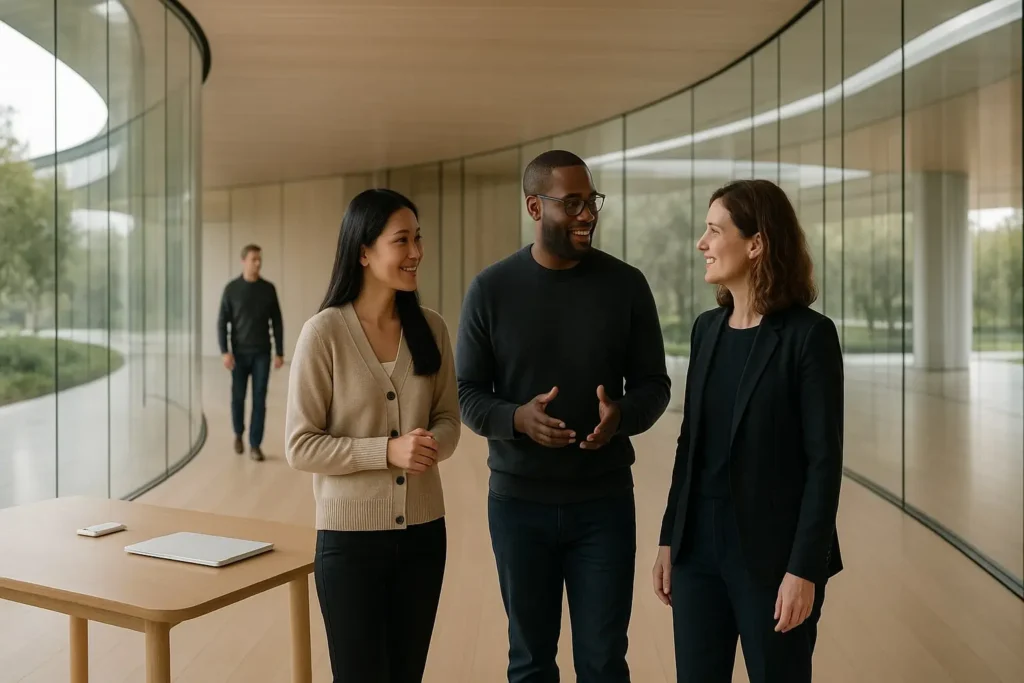
Inside Perspectives: How to Truly Impress Apple’s Hiring Team
Few things are more valuable than candid advice from those who’ve sat on both sides of the Apple interview table. Recruiters and employees consistently highlight that the “Apple bar” is high but approachable for those who prepare strategically and stay authentic.
Direct Quotes and Lessons from Apple’s Hiring Insiders
On Collaboration and Humility:
“Apple doesn’t just hire the smartest person in the room. We look for the ones who make everyone else in the room smarter, too. Collaboration and a willingness to challenge your own assumptions matter just as much as raw skill,” says recruiter Daniel Harten (source).
On Storytelling and User Focus:
A former Apple marketing manager shared, “If you can connect your work to how it impacts the customer, you’ll win hearts in the room. Apple is obsessed with the user experience at every touchpoint – show that you are, too” (source).
On Portfolio and Resume Impact:
Hiring teams consistently reject generic or “check-the-box” resumes. As Apple’s careers site makes clear: “Highlight the work that you’re most proud of, share measurable outcomes, and don’t be afraid to explain the ‘why’ behind your choices” (source).
On Interview Mindset:
“One of the best things you can do in a panel is ask thoughtful questions about the team’s projects and challenges. We’re impressed by candidates who are curious – not just prepared,” Daniel Harten emphasizes (source).
Comparison Table: Top Advice from Apple Insiders vs. Other FAANG Alumni
| Theme | Apple Insider Perspective | Other FAANG Alumni Perspective |
| Collaboration | “Challenge yourself and others – without ego” | “Teamwork matters, but results drive hiring” |
| Portfolio/Resume | “Show impact, process, and ‘why’ for each project” | “Quantify results, show growth over time” |
| Interview Questions | “Be curious, ask about team & projects” | “Prepare for bar-raiser rounds, be concise” |
| User Focus | “Tie every answer to the customer experience” | “Emphasize business or tech impact” |
Common Lessons Learned from Apple Employees
- Over-preparation isn’t a risk – most regret not digging deeper into the team or product they were interviewing for.
- Candidates who link answers to Apple’s values (innovation, user obsession, accessibility, collaboration) stand out.
- Humility, curiosity, and storytelling leave a lasting impression – regardless of outcome.
Final Checklist: How to Maximize Your Apple Application
- Research your target team and reference specific products or campaigns in your application.
- Tailor your resume and cover letter to highlight measurable impact and collaboration.
- Prepare 3-5 STAR stories that align with Apple’s core values (innovation, user focus, teamwork, accessibility).
- Review Apple’s interview tips page and practice “Why Apple?” aloud.
- Show curiosity in every stage: ask about team culture, challenges, and future projects.
- Never send a generic application – personalization and storytelling are key.
Expert Reminder:
As Apple recruiter Daniel Harten puts it, “We’re looking for candidates who care about making a difference for the user, not just getting a job.” (source)


FAQ
What is the best way to make my application stand out to Apple’s recruiters in 2025?
Customize every resume and cover letter for the specific team and role. Use quantifiable achievements, highlight cross-functional projects, and reference Apple products or values that inspire you.
How many interview rounds should I expect at Apple, and what types?
Most roles involve 4-8 interviews, including recruiter calls, technical or case challenges, behavioral rounds, and a team panel. All rounds include questions about collaboration, problem-solving, and user focus.
What is the single biggest mistake candidates make when applying to Apple?
Sending generic applications or focusing only on technical skills. Apple’s hiring managers repeatedly emphasize the need for authentic storytelling, measurable impact, and clear links to Apple’s mission.
How can I prepare for behavioral interviews at Apple?
Write out STAR stories focused on teamwork, user advocacy, creative problem-solving, and resilience under pressure. Review Apple’s official interview prep tips, and practice out loud with a peer or mentor.
Does Apple value recent graduates, or does it prefer experienced professionals?
Apple’s workforce does skew toward experienced hires, especially for technical and core design roles. However, early-career candidates with standout internships, strong portfolios, and a track record of impact and curiosity are often considered for junior roles.
Read Next
How to Get Into Graphic Design and Land Your First Design Job
Choose a design lane, build a three-project portfolio with case studies, and apply while 9,064 graphic design roles are open.
How to Find a Job: The Complete Step-by-Step Guide
How to find a job step by step: where to search, how to get past the ATS, the best way to apply faster, and how to automate your job search with LiftmyCV.
How to Become a Copywriter, From First Sample to First Paid Job
Pick a copy lane, build four samples that prove it, and apply while 1,944 copywriter roles sit open. Pay data and timelines included.