
Top 10 AI Skills to Get Hired in 2025 – What Employers Are Searching For
Discover the top AI skills employers need in 2025 - from prompt engineering to MLOps. Learn how to get ahead with real-world learning tips.
By 2025, 60% of companies will use AI in their operations, creating a high demand for professionals with AI expertise. Yet, fewer than 20% of job seekers have these skills, making this a huge opportunity for career growth. Here are the top AI skills employers want and how they’re applied:
- Prompt Engineering: Writing precise instructions for AI models to improve efficiency and output quality.
- Natural Language Processing (NLP): Building tools like chatbots, sentiment analysis, or text automation.
- Machine Learning Basics: Understanding how algorithms identify patterns and make predictions.
- AI Ethics and Compliance: Ensuring AI systems are fair, transparent, and meet regulations.
- AI Data Analysis: Using AI to extract insights from big data for better decision-making.
- AI-Assisted Content Creation: Leveraging tools to generate and refine written or multimedia content.
- Computer Vision: Developing AI that interprets visual data, like facial recognition or quality control.
- MLOps (AI System Management): Managing and deploying AI models at scale with reliability.
- AI Customer Service Tools: Automating support with chatbots and virtual assistants.
- AI Business Integration: Aligning AI tools with business goals and workflows.
To learn these skills, take online courses, earn certifications, and build projects to showcase your expertise. Employers are actively seeking professionals who can combine these skills with industry knowledge to drive innovation and efficiency.
1. Prompt Engineering
Prompt engineering involves creating instructions that help large language models generate accurate and relevant responses. Well-crafted, detailed prompts are key to getting the most out of AI tools as they become part of everyday workflows.
Here’s why it matters:
- Improves efficiency: Clear prompts reduce the need for multiple revisions.
- Cuts costs: Focused prompts minimize processing time and resource use.
- Maintains quality: Structured prompts ensure consistent and reliable outputs.
Professionals like content strategists, marketers, analysts, and product managers rely on prompt engineering to make AI solutions more dependable. Up next, we’ll look at how Natural Language Processing drives AI-powered communication.
2. Natural Language Processing (NLP)
Natural Language Processing (NLP) allows machines to understand, analyze, and generate human language. It’s the backbone of tools like chatbots, automated customer support, and extracting insights from unstructured text.
Key Uses of NLP
Here are some practical ways NLP is applied:
- Sentiment Analysis: Helps businesses monitor customer feedback and social media to understand public sentiment in real time.
- Document Automation: Speeds up reviews by extracting and organizing information from legal, financial, or medical documents.
- Multilingual Support: Powers translation and localization tools, enabling communication across multiple languages.
Roles That Use NLP
NLP skills are in demand across various fields. Here are some roles where they shine:
- Chatbot Developer: Creates conversational workflows and improves dialogue strategies.
- Data Scientist: Uses NLP algorithms to identify trends in text data.
- Content Strategist: Leverages text classification and SEO tools for precise messaging.
- Healthcare Analyst: Applies clinical NLP to analyze electronic health records and assist in care decisions.
How to Build NLP Skills
To get started in NLP, focus on these areas:
- Learn text preprocessing techniques like tokenization, normalization, and stop-word removal.
- Understand syntax parsing and semantic analysis.
- Gain hands-on experience with tools like NLTK, spaCy, and Hugging Face Transformers.
- Practice evaluating and fine-tuning models to improve accuracy and relevance.
Next, we’ll dive into Machine Learning Basics and how they’re shaping industries.
3. Machine Learning Basics
Machine learning allows systems to spot patterns in data and make predictions based on them. As more organizations shift to data-focused strategies, understanding the basics of ML becomes a key part of supporting organizational goals and modernizing operations.
In fields like marketing, finance, and healthcare, having ML knowledge helps you work effectively with technical teams, interpret model results, and use AI-driven insights to solve business problems. Up next: AI Ethics and Compliance, where you’ll learn how to ensure AI is used responsibly and within regulatory guidelines.
4. AI Ethics and Compliance

As AI becomes a central part of business operations, ethics and compliance are no longer optional – they’re now critical skills for ensuring responsible and transparent AI use. By 2025, these skills will be highly sought after across industries.
It’s not just about building and evaluating models anymore. Companies need professionals who can integrate ethical safeguards into every stage of machine learning workflows.
Key areas of expertise include:
- Data Privacy: Safeguarding sensitive information while adhering to regulations.
- Bias Mitigation: Identifying and addressing algorithmic bias, especially important in fields like finance and healthcare.
- Explainability: Making model decisions clear and understandable to build stakeholder trust.
- Regulatory Compliance: Ensuring systems meet legal and industry standards.
To develop these skills:
- Stay updated on AI regulations like those from the FTC, EU AI Act, and ISO standards.
- Perform ethical risk assessments to identify and address potential harms.
- Create clear, actionable ethical guidelines for teams and leadership.
Having a strong foundation in ethics and compliance is key to building trust in AI-driven solutions. Next, we’ll dive into AI Data Analysis.
5. AI Data Analysis
AI-driven data analysis builds on machine learning (ML) basics to deliver powerful insights from complex datasets. This approach leverages techniques like ML-based pattern recognition and forecasting to help businesses make informed decisions.
Key Skills to Master:
- Proficiency in Python and AI/ML libraries
- Expertise in SQL for data querying and manipulation
- Automated pattern detection and predictive modeling
- Statistical analysis for data interpretation
- Data visualization using BI tools
How It’s Used Across Industries:
- Retail: Predicting demand and segmenting customers
- Healthcare: Forecasting patient outcomes and optimizing resources
- Finance: Modeling risks and identifying fraudulent activities
- Manufacturing: Ensuring quality control and scheduling predictive maintenance
AI analysts excel when they know how to ask insightful questions, interpret results effectively, and turn data insights into actionable strategies. Strong analytical skills, a deep understanding of the industry, and clear communication are essential to ensure their findings resonate with decision-makers.
6. AI‑Assisted Content Creation
AI-assisted content creation uses generative tools to produce and refine written and multimedia content on a larger scale. This approach allows organizations to create more content efficiently without losing quality.
How It’s Used
AI tools are applied across various fields to streamline content creation:
- Marketing: Generate social media posts, email campaigns, blog outlines, and ad copy that align with a brand’s tone.
- Editorial Work: Summarize articles, test headlines, ensure adherence to style guides, and fact-check content for accuracy.
- Industry-Specific Needs: Create product descriptions, develop course materials, or draft detailed market reports.
Core Skills Needed
To make the most of AI-assisted tools, certain skills are essential:
- Prompt Design: Crafting effective inputs to guide AI tools.
- Editing and Fact-Checking: Ensuring accuracy and polish in AI-generated content.
- Maintaining Brand Voice: Keeping consistency in tone and messaging.
- Performance Analysis: Measuring how content performs and making necessary adjustments.
Up next, let’s dive into computer vision and its expanding role in visual AI.
7. Computer Vision
Computer vision turns images and videos into actionable data – driving technologies like facial recognition, autonomous vehicles, and virtual try-ons. By applying machine learning (ML) techniques, experts transform pixels into predictions. Building on the ML concepts discussed earlier (Section 3), computer vision uses pattern recognition to interpret visual information.
Major Applications
Computer vision plays a key role in various industries:
Healthcare & Medical Imaging
- Assists in analyzing diagnostic images
- Improves surgical navigation and patient monitoring
Retail & E-commerce
- Powers virtual try-on tools and personalized shopping
- Automates inventory tracking and cashierless checkout
Manufacturing & Quality Control
- Identifies defects and anomalies on production lines
- Ensures consistency by monitoring assembly processes
Security & Surveillance
- Enables facial recognition for access control
- Analyzes video feeds for crowd management and threat detection
Required Technical Skills
Professionals in this field often work with:
- Tools: TensorFlow, PyTorch
- Techniques: Image filtering and feature extraction, convolutional neural networks (CNNs)
- Programming Languages: Python, C++
Industry Impact and Demand
As more industries adopt computer vision, specialists skilled in developing, training, and deploying these models are increasingly sought after.
Emerging Trends
- Edge computing for processing images directly on devices
- 3D vision and depth sensing for better spatial awareness
- Real-time video analytics for immediate insights
Up next: explore how MLOps (Section 8) supports scalable deployment and management of these advanced vision models.
8. AI System Management (MLOps)
MLOps bridges the gap between development and production, ensuring AI models remain reliable, reproducible, and scalable. It builds on workflows like those used in computer vision deployments to streamline AI system management.
Key Components of MLOps
- Version control: Keep track of code and model versions to maintain consistency.
- Automated testing and validation: Ensure models perform as expected before deployment.
- Containerization and orchestration: Enable scalable and efficient deployment.
- Real-time monitoring and retraining: Continuously track performance and automate updates when needed.
Monitoring Performance
Effective performance tracking is essential for maintaining AI systems. Here’s what it involves:
- Real-time metric tracking: Monitor how models perform in live environments.
- Data drift detection: Identify when incoming data changes, which can affect model accuracy.
- Performance degradation alerts: Detect and address drops in efficiency or accuracy.
- Resource monitoring: Keep an eye on usage to optimize costs.
- Automated retraining: Trigger updates when performance falls below set thresholds.
- Security and compliance checks: Integrate safeguards into every stage of deployment.
With MLOps ensuring smooth and efficient AI operations, next, we’ll look at how AI is transforming customer service.
9. AI Customer Service Tools
AI-powered customer service tools, such as virtual assistants and AI-driven routing systems, leverage advanced architectures like MLOps to streamline support across industries like e-commerce, telecom, and banking. These tools process customer data in real time, helping reduce response times, improve first-contact resolution rates, and allow human agents to focus on more complex issues. They also enable 24/7 service while offering valuable insights to enhance customer engagement strategies.
Here’s what they bring to the table:
- Faster responses by automating routine inquiries.
- Tailored interactions using customer history and preferences.
- Actionable insights drawn from data to refine support approaches.
- Reduced workload for agents, leading to better job satisfaction.
Next, we’ll look into AI Business Integration.
10. AI Business Integration
AI Business Integration specialists connect advanced technology with day-to-day business operations. They focus on aligning AI tools with company workflows, ensuring smooth adoption among stakeholders, setting up APIs, and keeping systems running efficiently at scale. To excel in this role, professionals need to handle several crucial tasks:
- Align AI tools and initiatives with specific business goals and KPIs.
- Manage change effectively and gain stakeholder support.
- Set up and integrate AI APIs into existing systems seamlessly.
- Oversee deployments and quickly address performance issues.
Up next, discover where to build these AI skills in 2025.
Where to Learn AI Skills
Here’s a step-by-step guide to help you get started with AI on some of the best platforms:
- Learn Python and foundational math: Platforms like Coursera or edX offer great courses for beginners.
- Dive into machine learning and related topics: Udemy and LinkedIn Learning have courses on machine learning, data ethics, and MLOps.
- Get certified: Look into certifications like Google Machine Learning, Microsoft AI, or IBM Data Science to boost your credentials.
- Practice with projects: Build AI projects and share them on GitHub to showcase your skills.
- Consider AI boot camps: Programs like Springboard or Flatiron provide hands-on mentorship and practical learning.
Once you’ve built your skills and completed projects, the next step is learning how to present them effectively on your resume. Stay tuned for that in the following section.
Get an AI Job Faster with LiftmyCV’s Auto-Apply Agent
As you work on showcasing the top AI skills employers are demanding in 2025, don’t overlook the importance of how you present those skills. A well-structured, ATS-optimized resume can be the difference between getting noticed or overlooked. Tools like LiftmyCV make this easier by using advanced AI (powered by ChatGPT-4o) to help you build a recruiter-ready profile, automate your job search, and apply efficiently – so your tech skills shine and get seen.
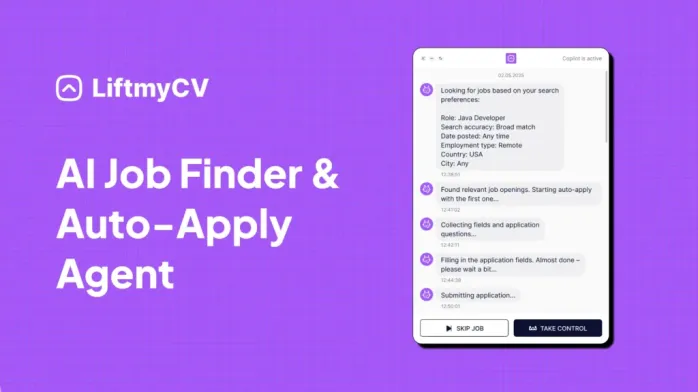
Key Features of LiftmyCV’s Auto-Apply System:
LiftmyCV simplifies your job hunt by automating repetitive tasks, ensuring your focus stays on what matters – developing and demonstrating in-demand AI skills. Here’s how it helps:
- Flexible Pricing Options: Choose between subscription or pay-as-you-go models depending on your budget and job search pace.
- AI-Powered Job Matching: Scans open roles and connects you with those aligned to your expertise and experience.
- ATS-Optimized Profile Creation: Helps you build a tailored, high-scoring resume that’s compatible across multiple ATS systems.
- Instant Compatibility Checks: Real-time feedback on your resume’s performance, with smart tips for improvement.
- Seamless Platform Syncing: Integrates with top job platforms including LinkedIn Jobs, Monster, Breezy HR, Ashby, and more.
- Smart Application Autofill: Automatically populates application forms in a clean, ATS-readable format.
- Flexible Application Limits: Manage your auto-apply settings using a Chrome extension to stay in control.
- Application Tracker & History: Monitor your applications, track results, and review submission details easily.
Available Submission Plans:
| Plan | CV submission | Cost | Model |
|---|---|---|---|
| Free plan | 3 AI Auto-Applies | $0 | Free |
| Subscription | 50 AI Auto-Applies /mo | $4.99 | Subscription |
| 500 Lifts | 500 AI Auto-Applies | $14.99 | Pay-as-you-go |
| 1000 Lifts | 1000 AI Auto-Applies | $24.99 | Pay-as-you-go |
| 2000 Lifts | 2,000 AI Auto-Applies | $39.99 | Pay-as-you-go |
You can further personalize your job hunt by setting filters based on your role, preferred location, or work style (remote, hybrid, on-site). LiftmyCV ensures your applications stay polished and consistent across platforms – so you can focus on positioning your AI skills for the roles that matter most.
Try LiftmyCV for free – no subscription required!
BONUS VIDEO: Top 10 AI Skills Employers Are Looking For To Get You Hired in (2025) Non Coding Skills In Demand
Conclusion: Next Steps
Once you’ve updated your resume with AI credentials, here’s a five-step guide to help you develop and showcase your AI skills in 2025:
- Start with the Basics
Get a solid understanding of machine learning fundamentals before diving into areas like prompt engineering or computer vision. - Pick a Focus Area
Decide which AI skills align with your career goals and industry. For instance, marketing professionals might concentrate on AI-driven content creation and natural language processing (NLP), while software engineers could focus on MLOps and deploying models. - Earn Certifications
Pursue recognized AI certifications to demonstrate your expertise and stand out in the job market. - Practice Through Projects
Work on hands-on projects, gradually increasing their complexity to deepen your understanding and build a strong portfolio. - Keep Your Profiles Updated
Regularly update your resume and LinkedIn profile with new certifications, tools you’ve mastered, and measurable achievements.
For an edge in your job search, try LiftmyCV’s AI-powered search and auto-apply features to quickly find and apply for relevant roles.


Read Next

How to Get Into Graphic Design and Land Your First Design Job
Choose a design lane, build a three-project portfolio with case studies, and apply while 9,064 graphic design roles are open.

How to Become a Copywriter, From First Sample to First Paid Job
Pick a copy lane, build four samples that prove it, and apply while 1,944 copywriter roles sit open. Pay data and timelines included.

How to Become a Case Manager: Entry Routes, Licenses, and Jobs
What you need to become a case manager, how to get in without a degree or experience, which certifications matter, and how to land your first job.