
Do I Need a Cover Letter? When to Send One and When You Can Skip
When a cover letter is required, when you can skip it, and how to write a tailored one fast for every job.
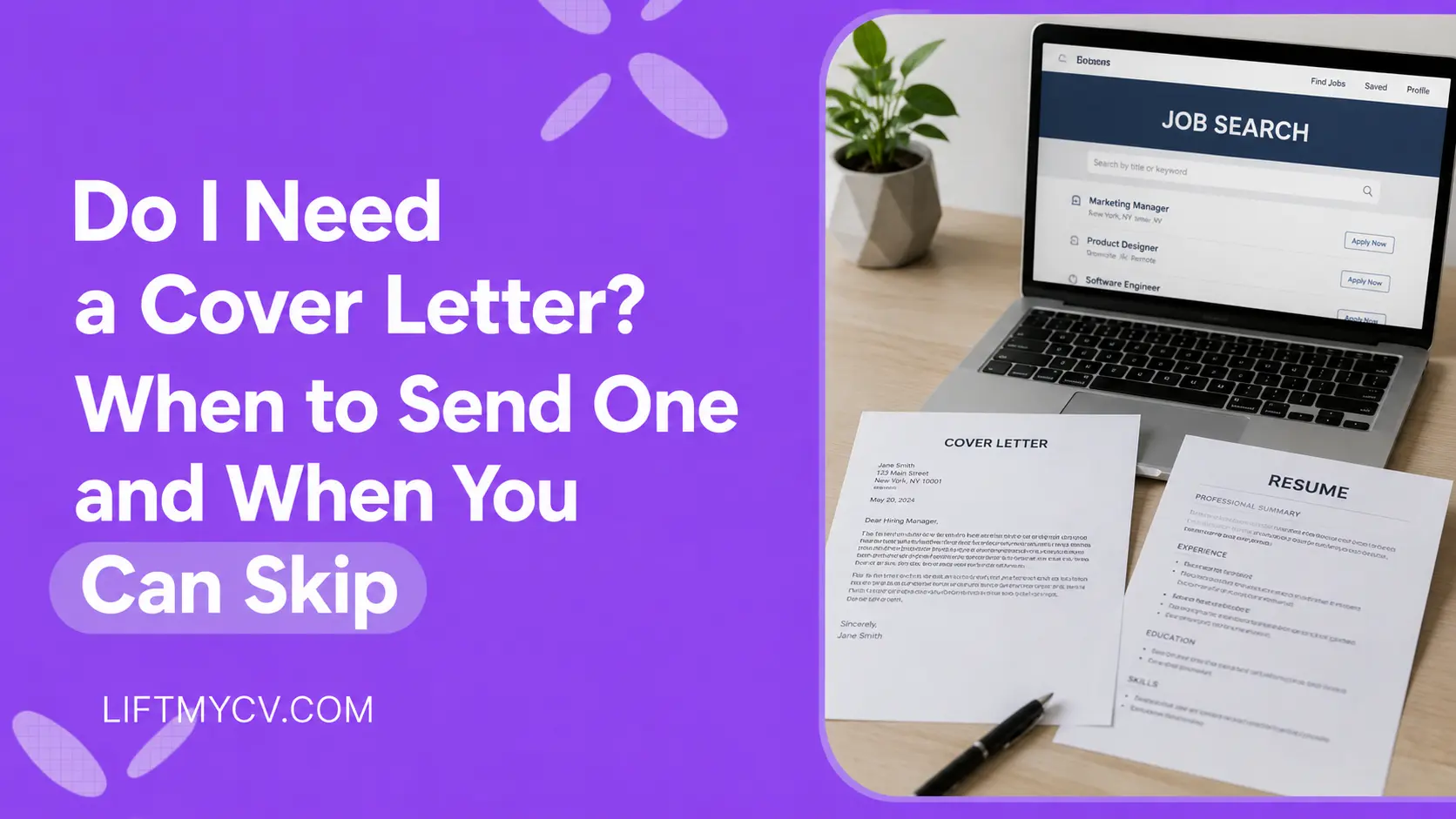
You have your resume ready, the application form is open, and there it is: an optional cover letter field. The question hits every job seeker. Do you actually need a cover letter, or is it a relic nobody reads anymore?
The short version is that you almost always do. More than 80% of recruiters say they read cover letters at least some of the time, and over half say a strong one has tipped them toward interviewing a candidate. Skipping it rarely helps you and sometimes quietly hurts you. This guide covers when a cover letter is required, when you can safely leave it out, and how to write one without burning an hour per application.
If the real reason you skip cover letters is that writing a fresh one for every job is exhausting, that is the part worth fixing, not the letter itself. You can generate a tailored cover letter for each role in seconds instead of starting from a blank page.
The Short Answer: Usually Yes
A cover letter is no longer an automatic requirement, but leaving one out is a missed opportunity more often than a smart shortcut. When two candidates look similar on paper, the cover letter is what gives a recruiter a reason to pick one. It is the only part of your application where you get to explain, in your own words, why you want this specific role.
So the honest default is to include one whenever the job matters to you and there is a field for it. The exceptions are real but narrow, and they depend almost entirely on what the posting asks for.
When You Definitely Need a Cover Letter
In some cases, sending one is not optional. Treat these as non-negotiable.
- The job posting explicitly asks for one. Skip it and some hiring managers will pass without even opening your resume.
- You are changing careers or industries, where a list of past roles does not explain the move on its own.
- You have a gap, a relocation, or anything that needs context a resume cannot give.
- It is a role you genuinely want, where being memorable is worth the extra effort.
When a posting requests a cover letter and you leave the field blank, you are not saving time. You are handing the recruiter an easy reason to move to the next application. That single missing document can cost you the interview before your experience is ever read.
When You Can Skip It
There are moments when a cover letter adds little. If you are applying at high volume to standard roles through quick-apply forms with no cover letter field, a strong resume carries the weight on its own. The same is true when a referral has already made your case internally, or when the posting clearly states not to send one.
Even then, the safer habit is to have a tailored letter ready so you are never caught without one on a job you later realize you want. Skipping is a choice for the roles that do not matter, not a default for the ones that do.
Never Skip a Cover Letter Again
LiftmyCV writes a tailored, job-specific cover letter for every application in seconds, so you are always ready when the field appears. Pay as you go, no subscription required.
Why Cover Letters Still Matter
Two shifts have kept the cover letter relevant. The first is the tie-breaker effect: when several candidates clear the bar on experience, a letter that connects directly to the role is often what earns the interview. The second is more technical. Because many applicant tracking systems now read your cover letter as part of your application, the keywords and qualifications you mention there raise your match score before a human is even involved.
That changes the math. A tailored cover letter is no longer just a courtesy to the recruiter. It is a second place to mirror the language of the job posting and reinforce that you fit. Done right, it works for you twice, with the software and with the person.
The Catch: A Bad Cover Letter Is Worse Than None
One warning. A generic cover letter that simply restates your resume can do more harm than skipping it. Recruiters spot a template instantly, and a letter that adds nothing signals low effort rather than high interest. If you are going to send one, it has to be specific to the role and the company.
This is exactly why people avoid them. Writing a genuinely tailored letter for every application is slow, and by the tenth job most candidates give up and paste the same paragraph everywhere. The fix is not to skip the letter. It is to make tailoring fast enough that you never have to choose between quality and volume.
How to Write One Without the Hassle
A good cover letter is short: three or four paragraphs that name the role, connect one or two of your achievements to what the company needs, and close with a confident next step. The structure is simple. The work is in tailoring it to each posting, every time.
That is the part you can hand off. Instead of writing from scratch, you can have a job-specific letter generated from your profile and the job description in seconds, then review and send. If you want to see the format that works before you start, these cover letter examples show the structure recruiters respond to, and a quick look at an AI cover letter workflow shows how much time tailoring saves once it is no longer manual.
So do you need a cover letter? For any job you actually want, yes. The smarter question is how to make writing one fast enough that you never skip it out of fatigue again.


FAQ
Is a cover letter still necessary?
For most roles you care about, yes. Recruiters still read them, and many applicant tracking systems now index them as part of your match score. You can skip one for high-volume quick-apply forms with no cover letter field, but include it whenever the job matters or the posting asks for it.
What happens if I do not include a cover letter?
If the posting did not ask for one, usually nothing. If it explicitly requested one, leaving the field blank can get your application passed over before your resume is read. When in doubt, send a tailored letter, since it rarely hurts and often helps.
Do recruiters actually read cover letters?
More than 80% say they read them at least some of the time, and over half say a strong one has influenced their decision to interview. The key word is strong. A generic letter gets ignored, while a tailored one can be the reason you get the call.
Should my cover letter repeat my resume?
No. A letter that restates your resume adds nothing and can read as low effort. Use it to connect your background to the specific role and to give context, like why you want this job at this company, that a list of bullet points cannot.
Read Next
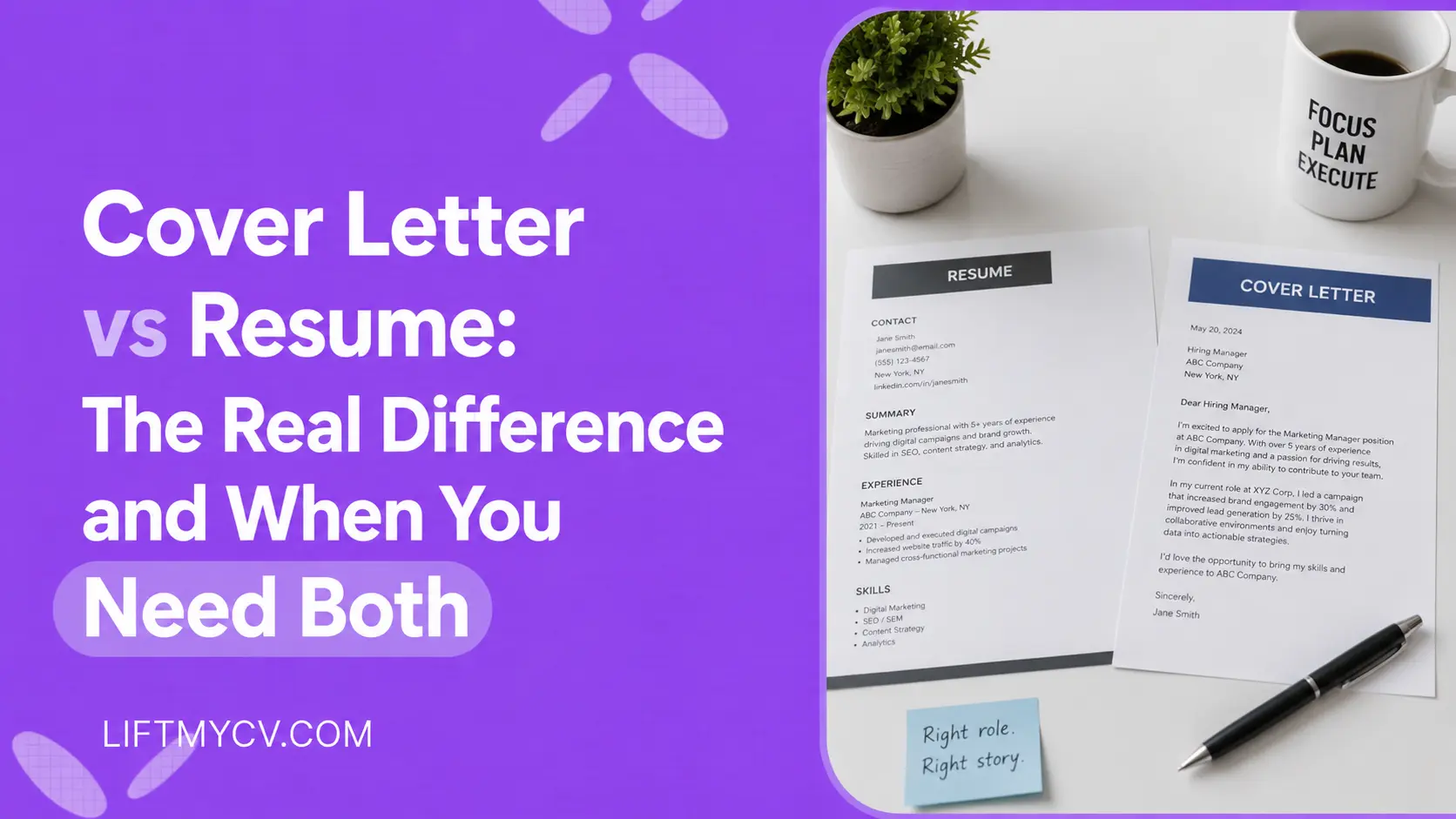
Cover Letter vs Resume: The Real Difference and When You Need Both
A resume proves you can do the job; a cover letter explains why you fit. The key differences, what goes in each, and when you need both.
Cover Letter Examples and Templates That Get You More Interviews
Real cover letter examples for any situation - no experience, career change, internship, and more - plus the format and tips that get interviews.
How to Make AI Writing Sound Human in a Cover Letter
Why an AI cover letter sounds robotic, what cover letter AI detection really flags, and how to make AI writing sound human before you hit send.