
How to Answer Interview Questions Like a Pro — Expert Tips & Examples
Learn how to answer common interview questions with expert tips, examples, and proven methods to boost your confidence and get hired faster.
Job interviews can feel overwhelming, but preparation makes all the difference. Here’s how you can confidently answer interview questions and leave a lasting impression:
- Research the Company: Learn about their culture, values, and the role you’re applying for.
- Practice Common Questions: Be ready for questions like “Tell me about yourself” or “What are your strengths and weaknesses?”
- Use the STAR Method: Structure your answers to behavioral questions with Situation, Task, Action, and Result.
- Showcase Your Skills: Align your experience with the job requirements, and back it up with specific examples.
- Ask Smart Questions: Prepare thoughtful questions about the role, team, and company goals.
With preparation and practice, you’ll feel confident and ready for any question that comes your way.
Top Interview Questions Explained
Understanding common interview questions helps you craft targeted, effective responses. Here’s a breakdown of the questions you’re likely to encounter and their purpose.
Most Common Questions
| Question Type | Common Examples | Purpose |
|---|---|---|
| Introduction | “Tell me about yourself” | Assesses communication skills and career path |
| Experience | “Walk me through your resume” | Reviews your professional journey and growth |
| Motivation | “Why do you want this job?” | Checks your interest in the role and preparation |
| Self-awareness | “What are your strengths/weaknesses?” | Evaluates honesty and self-improvement |
| Behavioral | “Tell me about a time when…” | Examines past actions and problem-solving skills |
When discussing strengths, focus on skills that match the role and back them up with specific examples. These details not only showcase your experience but also help employers understand how you align with their needs.
Understanding Employer Goals
Interview questions are designed to assess your skills, fit within the company, and potential for long-term success:
- Skills Assessment: Employers use technical questions to measure your expertise. For example, a manager might evaluate your initiative and problem-solving skills by asking how you’ve handled on-site challenges without immediate supervision.
- Cultural Fit: Questions about teamwork or workplace preferences reveal how well you might integrate into the company culture. Behavioral questions help employers determine whether your values align with their organization.
- Long-term Potential: Discussions about career goals allow employers to gauge your commitment and whether the role supports your professional ambitions.
As you prepare, consider these key employer priorities:
- Competency: Share examples that demonstrate your qualifications.
- Problem-Solving: Explain how you approach and resolve challenges.
- Communication: Show clear and professional communication skills.
- Leadership: Highlight your experience managing projects or teams.
- Flexibility: Provide examples of how you adapt to change and grow from it.
How to Structure Your Answers
Once you’re familiar with common interview questions, the next step is learning how to organize your responses. A well-structured answer not only highlights your qualifications but also keeps your response clear and impactful.
STAR Method Guide
The STAR method is a simple way to answer behavioral interview questions effectively:
- Situation: Start by briefly explaining the context (20-30 seconds).
- Task: Clearly outline your role or responsibility using “I” statements.
- Action: Describe the steps you took to address the situation (around 1 minute).
- Result: Wrap up with measurable outcomes or achievements.
“Behavioral questions are 55% effective at predicting job performance, whereas traditional interview questions are only 10% effective.” – Katharine Hansen, Career Expert
Matching Answers to Jobs
Customize your answers to align with the job description, essential skills, and the company’s mission. Pay attention to:
- Core responsibilities
- Technical skills required
- Company values
- Current industry trends
For example, if you’re applying for a project management role, focus on skills like leadership, budget management, meeting deadlines, communication, and handling risks.
“This understanding helps you tailor your interview responses to align with the company’s principles and showcase your genuine interest.” – Graduates First
Handling Tough Questions
Some interview questions can be tricky, but with preparation, you can navigate them confidently:
Employment Gaps
- Highlight any professional development or certifications during that time.
- Mention freelance or volunteer work you took on.
- Briefly explain the reason for the gap without overexplaining.
Discussing Weaknesses
- Pick a skill that’s not critical to the job.
- Share specific steps you’re taking to improve.
- Emphasize your willingness to grow and learn.
Salary Discussions
- Research salary benchmarks for the role.
- Present a range based on data and your experience.
- Factor in the overall compensation package, including benefits.
Land More Interviews with LiftmyCV
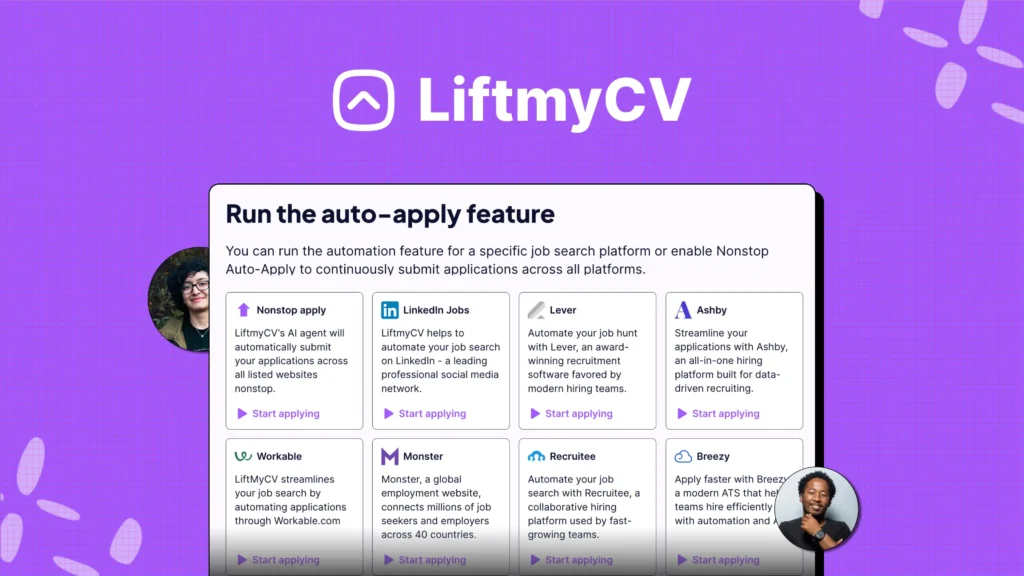
Once you’ve mastered how to answer interview questions like a pro, the next step is landing more interviews. That means applying smarter, not harder. Tools like LiftmyCV can supercharge your job search by making your profile ATS-friendly and automating the application process – all powered by the latest AI advancements, including ChatGPT-4o.
How LiftmyCV Simplifies Your Job Hunt:
LiftmyCV isn’t just a resume tool – it’s your personal AI job search assistant. Here’s how it takes the hassle out of applying:
- Flexible Pricing Options: Choose between a pay-as-you-go plan or a subscription model – whichever fits your job search style best.
- AI-Powered Job Matching: Automatically scans job listings and connects you with roles that match your skills and experience.
- ATS-Optimized Profile Builder: Ensures your resume and profile meet the latest applicant tracking system (ATS) standards.
- Instant Resume Scoring: Provides real-time feedback to improve your resume’s performance in ATS filters.
- Multi-Platform Integration: Seamlessly connects with top job boards like LinkedIn Jobs, Recruitee, Workable, Lever, Monster, Breezy HR, Ashby, and more.
- Smart Autofill for Applications: Saves time by populating forms with your information in ATS-friendly formats.
- Application Tracking: Keep tabs on your auto-apply history and monitor performance metrics for every application.
- Custom Apply Limits: Set daily application limits via a Chrome extension to stay in control.
Available Submission Plans:
| Plan | CV submission | Cost | Model |
|---|---|---|---|
| Free plan | 3 AI Auto-Applies | $0 | Free |
| Subscription | 50 AI Auto-Applies /mo | $4.99 | Subscription |
| 500 Lifts | 500 AI Auto-Applies | $14.99 | Pay-as-you-go |
| 1000 Lifts | 1000 AI Auto-Applies | $24.99 | Pay-as-you-go |
| 2000 Lifts | 2,000 AI Auto-Applies | $39.99 | Pay-as-you-go |
With LiftmyCV, you can also fine-tune search filters by job title, location, and preferred work setup (remote, hybrid, or in-office), ensuring your applications are always aligned with your goals. Plus, the system keeps your resume consistently formatted to boost your visibility across various ATS platforms.
Try LiftmyCV for free – no subscription required!
U.S. Interview Best Practices
Your in-person demeanor is just as important as your tailored responses when it comes to interview success.
Professional Interview Conduct
Pay attention to both what you say and how you act. Dress appropriately – opt for a dark suit for corporate roles or pressed slacks with a collared shirt for business casual settings. Keep your responses clear and to the point, lasting 1-2 minutes, and maintain steady eye contact to show confidence. While friendly conversation is welcomed, steer clear of overly personal topics.
Discussing Pay and Benefits
“The salary question isn’t just about numbers. It’s a complex negotiation that requires preparation, strategy, and timing. Employers use it to gauge if they can afford you, while you can use it to affirm your value.”
| Discussion Phase | Best Practice | What to Avoid |
|---|---|---|
| Initial Interview | Delay detailed salary talks | Discussing specific numbers too early |
| Mid-Process | Provide researched salary range | Giving a single fixed number |
| Offer Stage | Negotiate total package | Focusing only on base salary |
When talking about compensation, keep these factors in mind:
- Your experience and qualifications
- Industry pay standards for your role
- The cost of living in the job’s location
- The overall value of the compensation package
These tips can help you navigate salary discussions effectively.
Questions to Ask Employers
Asking thoughtful questions not only shows your interest but also demonstrates you’re a good match for the role.
Company Growth and Culture
- “What are the company’s main priorities for the next 12-24 months?”
- “How does the company support professional development?”
- “Can you describe the team’s collaboration style?”
Role Expectations
- “What defines success in this position during the first 90 days?”
- “How does this role contribute to broader company objectives?”
- “What are the biggest challenges facing this position?”
Management Style
- “How would you describe your leadership approach?”
- “What qualities do your top performers share?”
- “How does the team handle project deadlines and priorities?”
BONUS: How to Answer the 7 Most Common Interview Questions
Conclusion: Steps for Success
To succeed in any interview, it’s crucial to focus on preparation, practice, and staying up-to-date with modern tools. With more than half of candidates being rejected at the first interview stage, preparation is key.
- Lay the Groundwork
Begin by researching common interview questions specific to your field. Use the STAR+R method (Situation, Task, Action, Result, and Reflection) to structure your answers. This approach helps you provide clear and well-rounded responses that showcase your skills and experiences. - Practice Effectively
Refine your interview skills by practicing with purpose. Be ready for the most common questions and learn how to showcase your skills effectively before the interview to increase your possibility of getting an offer. - Get Comfortable With Technology
A survey found that 51% of recruiters use interview scheduling software, while 28% rely on video interviewing tools. Familiarize yourself with these platforms to ensure you’re ready for modern interview formats.
| Interview Success Factor | Impact on Outcomes |
|---|---|
| Structured Practice | Reduces nervousness and improves response quality |
| Professional Feedback | Highlights areas for improvement and blind spots |
| Technology Familiarity | Builds confidence with modern interview formats |
Success in interviews comes from a mix of preparation and genuine delivery. Focus on crafting responses that showcase your experiences while keeping the conversation natural. These strategies and tools will help you approach each question with confidence and clarity.


Read Next
Top 10 Interview Questions & Best Answer Tips by Experts
Ace your next interview with expert-backed answers to the top 10 interview questions. Get proven tips, real examples, and winning strategies for 2025.
Follow-Up Emails After Interviews | Templates + AI Writing Tips
Discover how to write follow-up emails after interviews and applications using AI tools. Get templates and tips to improve your chances.
How to Use ChatGPT to Prepare for Job Interviews (2025 Guide)
Learn how to use ChatGPT to prepare for interviews in 2025. Run mock interviews, get feedback, and master the STAR method with AI prompts.