
Is Auto-Apply Worth It? An Honest Look at the Cost and Payoff
Whether auto-apply is worth it comes down to match quality, not speed. When it pays off, when it wastes money, and how to set it up right.
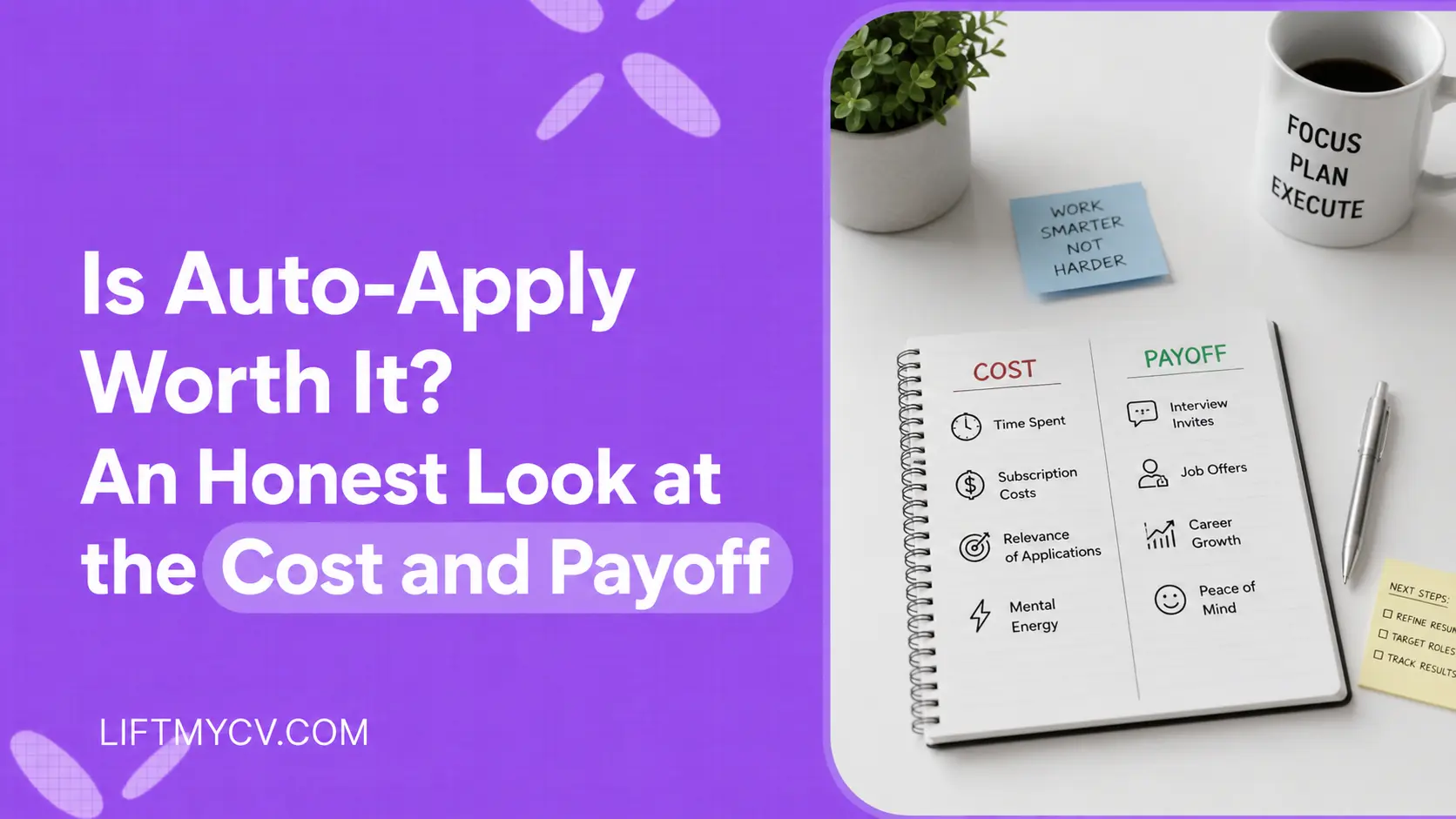
Auto-apply tools promise to apply to hundreds of jobs while you sleep. The pitch is tempting when you are spending 11 hours a week retyping the same work history into different portals. But the real question is not whether the software can submit applications fast. It is whether those applications get you interviews.
So is auto-apply worth it? It depends entirely on how the tool works and how you use it. Used as a spray-and-pray button, it wastes your money. There is also the safety question of whether automating applications can flag your account, which we cover in is it safe to auto-apply to jobs. Used to send tailored applications to roles you actually fit, it pays for itself in the hours it gives back. Here is how to tell which side you will land on before you pay for anything.
If you are weighing the cost against the payoff, the deciding factor is almost never speed. It is whether each submission is matched and tailored to the job, or just another copy of the same resume.
The Short Answer: It Depends on How You Use It
Auto-apply is worth it when it does more than fire off forms. The tools that earn their cost find roles that match your profile and rewrite your resume around each posting’s keywords before submitting. The ones that waste your money just blast one static resume everywhere and call it volume.
Recruiters can tell the difference instantly, and so can the applicant tracking systems that screen most applications before a human sees them. A generic submission gets filtered out no matter how fast it arrived. So the value of any auto-apply tool comes from one thing: match quality, not submission count.
When Auto-Apply Is Worth It
For some situations the math is obvious. If any of these sound like you, automation will save real hours without hurting your odds.
- You apply to 20 or more roles a week and the form-filling is eating your evenings.
- You are targeting standard corporate or tech roles with predictable application forms.
- You have a current job and cannot apply during business hours when listings are fresh.
- You are casting across several job boards at once and logging in and out of each is draining your week.
In these cases the tool is not replacing your judgment. It is handling the repetitive part so your energy goes to interviews and outreach. The volume is high, the roles are standardized, and a tailored resume keeps each application relevant. That is the sweet spot where auto-apply clearly pays off.
When It Is Not Worth It
Automation is the wrong call in a few cases. If you are applying to a handful of senior roles where every application needs a custom portfolio, a personal referral, or a creative submission, a tool adds little. Those applications live or die on personalization a machine cannot fake.
It is also not worth it if the tool only sends one static resume to everything. That is the version of auto-apply that earns the bad reputation, because it floods inboxes with off-target applications that get filtered before anyone reads them. Speed without tailoring is just faster rejection.
Make Every Auto-Apply Count
LiftmyCV does not just submit fast. It matches you to roles you fit and tailors your resume to each posting, so the applications that go out actually land. Pay as you go, no subscription required.
What Actually Decides the Outcome
Strip away the marketing and two things separate a tool that gets interviews from one that burns cash. The first is matching: does it apply to roles you genuinely fit, or to anything with a loosely related keyword? The second is tailoring: does it rewrite your resume around each posting, or attach the same file every time?
Get both right and a high application volume turns into a steady stream of callbacks. Get either wrong and you are paying to be filtered out faster. This is also why volume alone is a poor measure of value. Applying to 500 mismatched roles is worse than applying to 50 strong ones, no matter how cheap the per-application cost looks.
The Cost Math
Pricing models vary, so compare them against the hours you are spending now. If form-filling eats 30 or more hours a week, a tool that gives most of that time back is easy to justify even at a modest monthly cost. What you want to avoid is paying for raw volume you do not need.
A pay-as-you-go model usually wins here, because you only pay for applications that actually go out instead of locking into a subscription for capacity you may never use. If you are also fighting the silence of unanswered applications, the time you reclaim can go straight into the follow-ups and tailoring that break through the no-response wall.
How to Make Auto-Apply Worth It
The tool is only half the equation. Your setup decides the rest. Keep your filters tight so every match is a genuine fit. Build one strong, keyword-rich base resume for the AI to tailor from. Start in review mode, then switch to autopilot once you trust the matches. And reserve 20 minutes a day for the few roles you want most, where a referral or a personal note moves the needle.
Do that, and the answer to whether auto-apply is worth it becomes a clear yes. The hours you save are real, the applications stay relevant, and your energy lands where decisions are actually made. Choosing the right tool is the last piece, so it helps to compare what each option actually does before you commit.


FAQ
Is auto-applying to jobs bad?
Only when it sends generic applications. A tool that tailors your resume to each posting and applies to roles you fit is not bad at all. The reputation problem comes from spray-and-pray use, not from automation itself.
Do auto-apply tools actually work?
The good ones do, when match quality is high. Tools that apply based on tight filters and rewrite your resume per job produce real callbacks. Tools that blast one static resume everywhere mostly produce silence. The mechanism matters more than the label.
How much should I pay for auto-apply?
Compare the cost to the hours you spend applying by hand. If a tool saves 30-plus hours a week, a modest monthly fee pays for itself. A pay-as-you-go model is usually the safest, since you only pay for submissions that go out.
Will auto-apply hurt my chances with recruiters?
Not if the applications are tailored. Recruiters react to generic, off-target submissions, whether a person or a tool sent them. A resume built around the role reads as a strong fit regardless of how it was submitted.
Read Next
Simplify Jobs Review: The Chrome Extension, Pricing & Alternatives
A Simplify Jobs review of the Chrome extension, pricing, and how it works, plus the best Simplify alternative that adds hands-off auto-apply to AI job matching.

AIApply Review: Pricing, Features & the Best Alternative
An AIApply review covering pricing, features, and whether it is worth it, plus the best AIApply alternative for hands-off, high-volume auto-applying.
How to Set Up Job Alerts on LinkedIn and Indeed
Hand the repetitive steps to software and reach far more employers. A step-by-step guide to automating your job search the smart way.